 Pin it
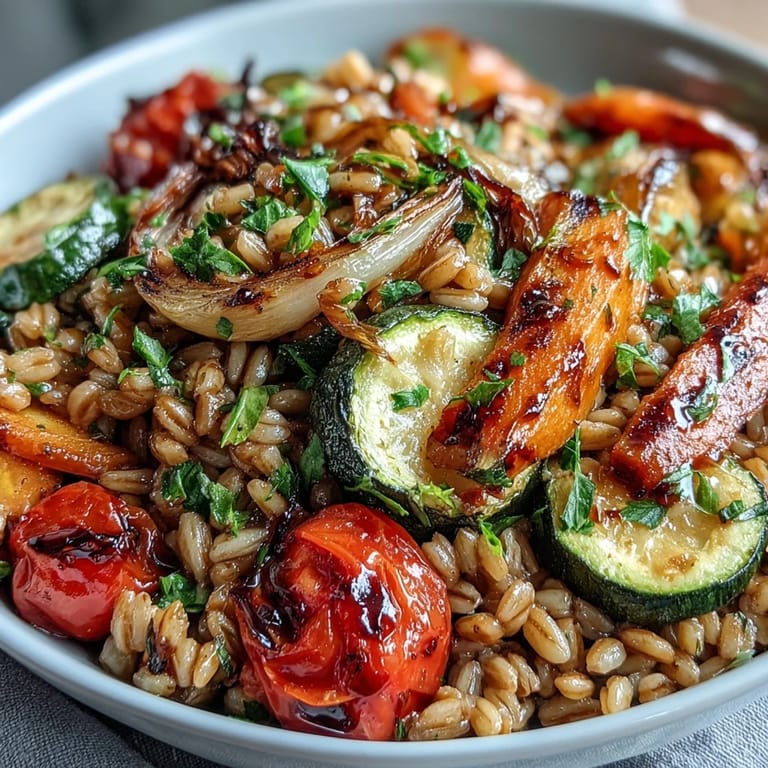
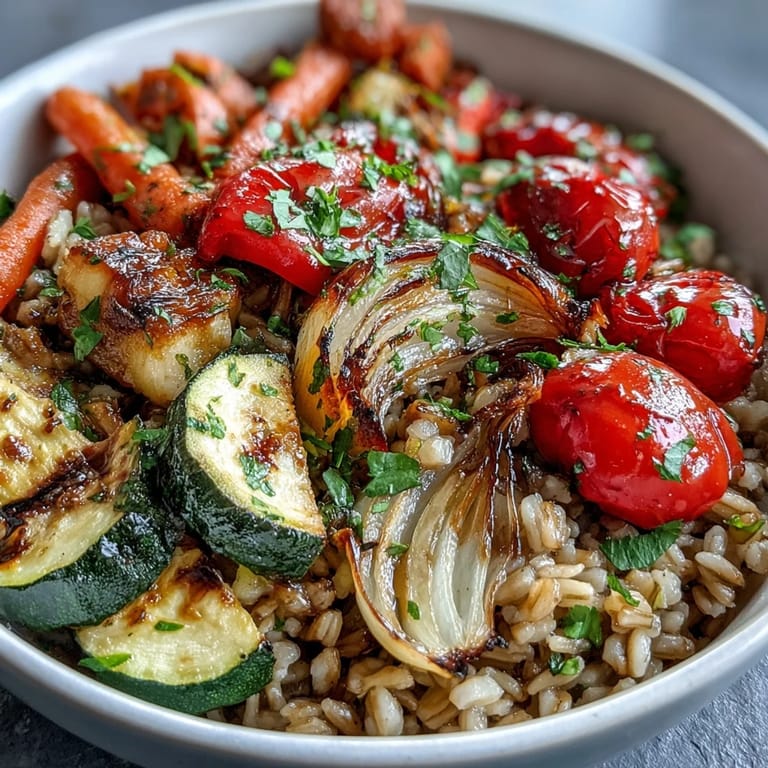
 There's something wonderfully grounding about watching vegetables transform in a hot oven—the way the edges char just slightly while the insides turn silky and sweet. I discovered this farro bowl on a Wednesday night when I had half a vegetable drawer and a craving for something that felt both nourishing and a little bit fancy. The grain itself has this satisfying chewiness that doesn't disappear into mush, and when you tumble it together with caramelized vegetables and a simple vinaigrette, it becomes the kind of meal that tastes even better the next day.
I made this for a friend who had just moved to town, and she sat at my kitchen counter while I organized vegetables and talked about nothing important. Something about the smell of herbs and caramelizing onions made the whole visit feel less formal—less like entertaining and more like two people sharing a meal. She asked for the recipe before she even finished eating, which is always the moment I know something has landed right.
Ingredients
- Farro: This ancient grain has a naturally nutty flavor and holds its texture beautifully, unlike rice which can turn mushy; look for it in the bulk section or near other whole grains.
- Vegetable broth or water: Broth adds extra flavor, but water works just fine if that's what you have on hand.
- Red bell pepper: Sweet and slightly crispy after roasting, it adds color and a little brightness.
- Zucchini: It releases moisture as it cooks, so cutting it into even pieces helps it caramelize instead of steam.
- Red onion: Cut into wedges rather than dice so the layers stay intact and the edges crisp up beautifully.
- Carrot: Sliced thinly enough to cook through in the same time as everything else but thick enough to keep some bite.
- Cherry tomatoes: Split in half so they can burst slightly and concentrate their sweetness during roasting.
- Olive oil for roasting: Use regular olive oil here since high heat breaks down the more delicate extra-virgin kind.
- Dried thyme and oregano: These Mediterranean herbs are the backbone of the flavor—dried versions actually work better than fresh when roasting.
- Extra-virgin olive oil: Save this for the dressing where its flavor actually matters and the heat won't damage it.
- Balsamic vinegar: It adds acidity and a subtle sweetness that ties everything together without being sharp.
- Fresh parsley: A handful stirred in at the end gives brightness and stops the whole dish from feeling too heavy.
- Feta cheese: Crumbled over the top just before serving, salty and creamy against the warm grain and vegetables.
Tired of Takeout? 🥡
Get 10 meals you can make faster than delivery arrives. Seriously.
One email. No spam. Unsubscribe anytime.
Instructions
- Get your oven ready and prep the pan:
- Turn the oven to 425°F and line a large baking sheet with parchment paper so cleanup is minimal and nothing sticks.
- Season and spread the vegetables:
- In a big bowl, toss your bell pepper, zucchini, onion, carrot, and tomatoes with 2 tablespoons of regular olive oil and the thyme, oregano, salt, and pepper until everything is evenly coated. Spread them out on the baking sheet in a single layer without crowding—they need room to caramelize, not steam.
- Roast until caramelized:
- Slide the sheet into the oven and roast for 25 to 30 minutes, stirring halfway through so the pieces cook evenly. You're looking for golden-brown edges and vegetables that are tender when you poke them with a fork.
- Cook the farro while vegetables roast:
- Rinse the farro under cold water in a fine sieve, then combine it with 3 cups of vegetable broth in a medium saucepan. Bring it to a boil, reduce the heat to low, cover, and let it simmer gently for 25 to 30 minutes until the grains are tender but still have a little chew to them. If there's excess liquid at the end, drain it off.
- Bring everything together:
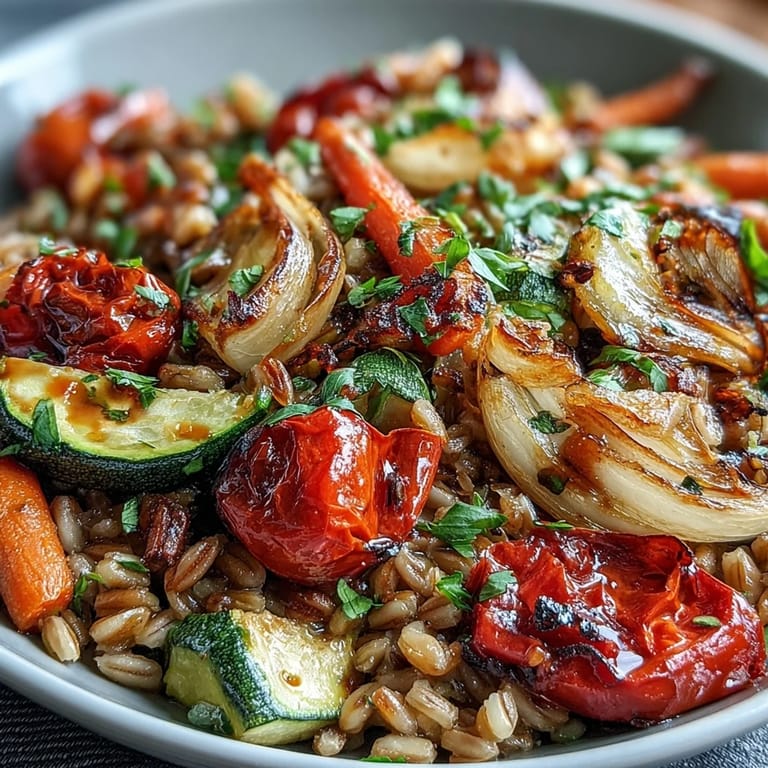
- Transfer the cooked farro to a large bowl and add the roasted vegetables while they're still warm. Drizzle with 2 tablespoons of extra-virgin olive oil and the balsamic vinegar, then toss gently so everything gets coated but the vegetables don't fall apart.
- Finish and serve:
- Stir in the fresh parsley, taste and adjust salt and pepper if needed, then top with crumbled feta if you're using it. Serve it warm straight away or let it cool and eat it at room temperature—it's genuinely good both ways.
 Pin it
 This dish has become one of those meals that proves you don't need complicated technique or a long ingredient list to make something memorable. It's the kind of food that tastes like care without tasting like you stressed about it.
Why This Works as Both Main and Side
The beauty of farro with roasted vegetables is that it's substantial enough to stand alone as a main course, especially if you add the feta or serve it alongside some grilled protein. But it's also the kind of dish that plays beautifully next to roasted chicken or fish without trying to overshadow anything else on the plate. The grain acts as an anchor while the vegetables add color and flavor without being precious about it.
Seasonal Swaps and Variations
The magic of this recipe is that it adapts to whatever's in season or in your refrigerator. In autumn, I use butternut squash and mushrooms for earthiness; in spring, smaller vegetables like baby carrots and snap peas work wonderfully and cook faster. Even vegetables that seem delicate, like eggplant or asparagus, become completely different creatures when they hit a hot oven and emerge caramelized and sweet.
Serving and Storage Tips
I've learned that this dish actually tastes better after it's been refrigerated and brought back to room temperature, when all the flavors have had time to mingle and settle. It keeps beautifully in a container for up to four days, and you can easily reheat it gently in a pan if you want it warm, though it's honestly perfect cold straight from the fridge on a busy day.
- Make it on Sunday and portion it into containers for the week ahead, knowing it'll taste just as good on Wednesday.
- If you're serving it warm, toss it together just before plating so the parsley stays bright and the feta doesn't disappear into the warm grain.
- Leftovers actually improve if you add a tiny drizzle of fresh olive oil before eating, which wakes everything back up.
 Pin it
 This is the kind of recipe that teaches you something about food without ever feeling like a lesson. Make it once and you'll understand why simplicity and good ingredients matter.
Recipe FAQs
- → What does farro taste like?
Farro has a nutty, slightly earthy flavor with a satisfying chewy texture similar to barley but slightly lighter. It absorbs flavors beautifully from broths and dressings.
- → Can I make this ahead of time?
Absolutely. This dish actually improves as the flavors meld together. Store in the refrigerator for up to 4 days and serve cold, at room temperature, or gently warmed.
- → Is farro gluten-free?
No, farro contains gluten as it's a type of wheat. For a gluten-free alternative, try substituting with quinoa, brown rice, or sorghum.
- → What vegetables work best for roasting?
Root vegetables, bell peppers, zucchini, eggplant, and cherry tomatoes all roast beautifully. Choose vegetables that caramelize well and maintain some structure after cooking.
- → Do I need to rinse farro before cooking?
Rinsing farro removes dust and residual starch, though it's not strictly necessary. A quick cold-water rinse helps ensure the grains cook evenly and stay separate.