 Pin it
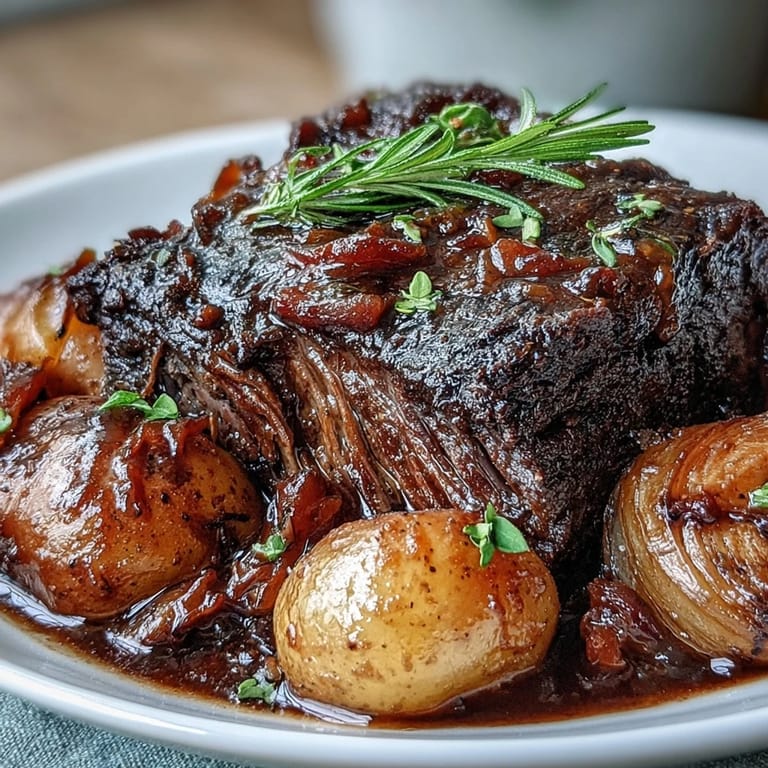
 A classic comfort dish, this succulent beef pot roast is slow-braised in a rich broth of red wine, tomato paste, and aromatic herbs. Tender carrots, celery, and baby potatoes soak up the luscious gravy, making every bite hearty and satisfying.
Pin it Perfect for Sunday dinner, this intermediate-level American dish takes about 3 hours and 40 minutes from start to finish. The preparation is straightforward, involving a deep sear to lock in juices before the roast settles into the oven for a long, aromatic braise.
Ingredients
Tired of Takeout? 🥡
Get 10 meals you can make faster than delivery arrives. Seriously.
One email. No spam. Unsubscribe anytime.
- 3–3.5 lb (1.4–1.6 kg) beef chuck roast or blade roast, well-marbled
- 1 ½ tsp kosher salt (plus more to taste)
- 1 tsp freshly ground black pepper
- 2 tbsp all-purpose flour (or gluten-free flour)
- 3 tbsp olive oil or vegetable oil, divided
- 1 tbsp unsalted butter
- 1 large yellow onion, sliced into thick wedges
- 4 cloves garlic, smashed and peeled
- 4 medium carrots, peeled and cut into 2-inch chunks
- 3 ribs celery, cut into 2-inch chunks
- 1 ½ lb (680 g) baby potatoes or small waxy potatoes, whole or halved if large
- 2 tbsp tomato paste
- 1 cup (240 ml) dry red wine
- 2 ½ cups (600 ml) low-sodium beef broth
- 1 tsp Worcestershire sauce
- 2 sprigs fresh rosemary (or 1 tsp dried)
- 3 sprigs fresh thyme (or 1 tsp dried)
- 2 bay leaves
- 1 ½ tbsp cornstarch mixed with 2 tbsp cold water (optional)
- Chopped fresh parsley (for garnish)
Instructions
- Step 1
- Preheat oven to 300°F (150°C) if using the oven method.
- Step 2
- Pat the beef roast dry and season all sides with kosher salt and black pepper.
- Step 3
- Lightly coat the roast with flour, dusting off any excess.
- Step 4
- Heat 2 tbsp oil and butter in a large heavy pot or Dutch oven over medium-high heat. Sear the roast for 4–5 minutes per side until deeply browned, including the edges. Transfer to a plate.
- Step 5
- Reduce heat to medium. Add remaining 1 tbsp oil if needed. Cook onion wedges for 3–4 minutes until golden, then add garlic and cook for 30–60 seconds.
- Step 6
- Stir in tomato paste and cook for 1–2 minutes until darkened.
- Step 7
- Pour in red wine, scraping up browned bits, and simmer for 2–3 minutes.
- Step 8
- Add beef broth and Worcestershire sauce, stirring to combine.
- Step 9
- Add rosemary, thyme, and bay leaves. Return the roast and any juices to the pot, nestling it halfway into the liquid.
- Step 10
- Bring to a gentle simmer, cover tightly, and reduce heat to low or transfer to the oven. Cook for 1.5 hours.
- Step 11
- Turn the roast over. Add carrots, celery, and potatoes around the roast, submerging them. Cover and cook for another 1.5–2 hours until beef is very tender.
- Step 12
- Remove roast and vegetables to a platter and tent with foil. Skim excess fat from the liquid.
- Step 13
- For a thicker gravy, simmer the liquid and stir in the cornstarch slurry for 2–3 minutes until thickened.
- Step 14
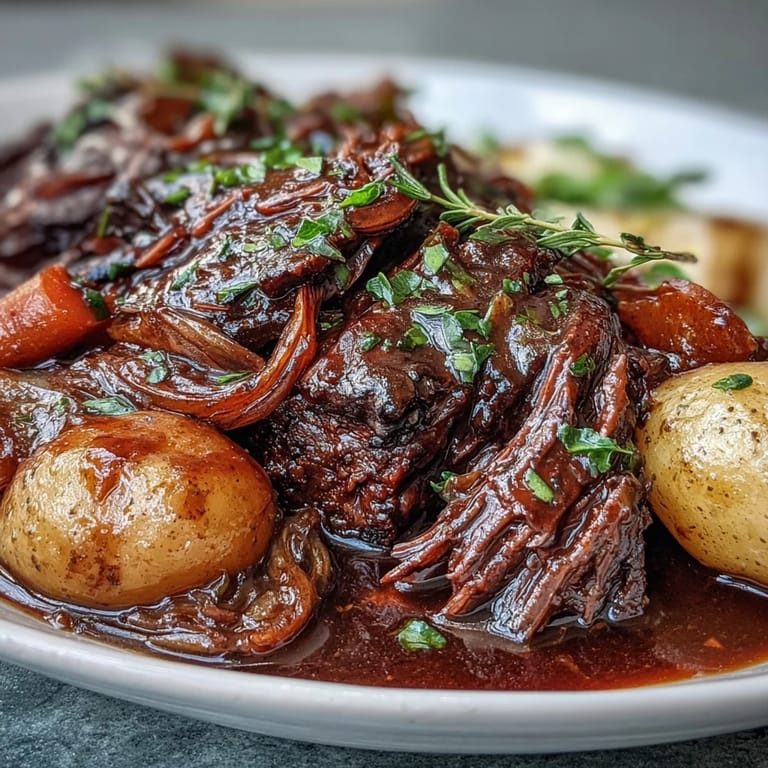
- Discard herb stems and bay leaves. Shred beef into large chunks or slice against the grain.
- Step 15
- Return beef to the pot or arrange over vegetables and spoon sauce on top. Garnish with parsley.
- Step 16
- Serve hot with crusty bread, buttered noodles, or mashed potatoes.
Zusatztipps für die Zubereitung
For slow cooker preparation, transfer everything to the slow cooker after the searing steps. Cook on low for 8–10 hours or high for 5–6 hours, adding vegetables halfway through for a firmer texture. For the richest flavor, use half beef broth and half homemade stock; the browning stage is essential for creating depth.
Varianten und Anpassungen
To make this dish gluten-free, substitute all-purpose flour with a gluten-free flour blend and ensure both the beef broth and Worcestershire sauce are certified gluten-free. For a lighter version, you can trim visible fat from the roast before cooking.
Serviervorschläge
Serve this hearty pot roast alongside crusty bread, buttered noodles, or creamy mashed potatoes to enjoy every drop of the rich gravy. Leftovers are even better the next day and work perfectly for sandwiches, tacos, or served over a bed of rice or polenta.
 Pin it
 Enjoy this timeless American classic that brings comfort and warmth to any dinner table. With its tender textures and savory aromatics, it is sure to become a family favorite.
Recipe FAQs
- → What cut of beef works best for pot roast?
Chuck roast or blade roast are ideal choices because they contain abundant marbling and connective tissue. As the meat braises slowly, these tissues break down into gelatin, creating incredibly tender, succulent beef that falls apart easily.
- → Can I make this in a slow cooker?
Absolutely. After searing the beef and building the flavor base on the stovetop, transfer everything to your slow cooker. Cook on low for 8–10 hours or high for 5–6 hours, adding the vegetables during the final hours so they maintain their shape.
- → Why is tomato paste added to the braising liquid?
Tomato paste provides deep umami flavor and natural acidity that balances the richness of the beef. Cooking it briefly with the onions caramelizes its sugars, adding complexity and helping create a darker, more robust gravy.
- → What can I substitute for red wine?
Additional beef broth works beautifully as a non-alcoholic alternative. You might also add a splash of balsamic vinegar or extra Worcestershire sauce to maintain some acidity and depth that the wine would typically provide.
- → How do I know when the pot roast is done?
The beef is ready when it yields easily to a fork and can be pulled apart into large chunks with minimal effort. This typically takes about 3 hours of gentle braising. The vegetables should be tender but still holding their shape.
- → Why should I let the meat rest before serving?
Resting allows the juices to redistribute throughout the meat rather than spilling out onto the cutting board. This ensures each bite remains moist and flavorful, while the sauce thickens slightly for better coverage.