 Pin it
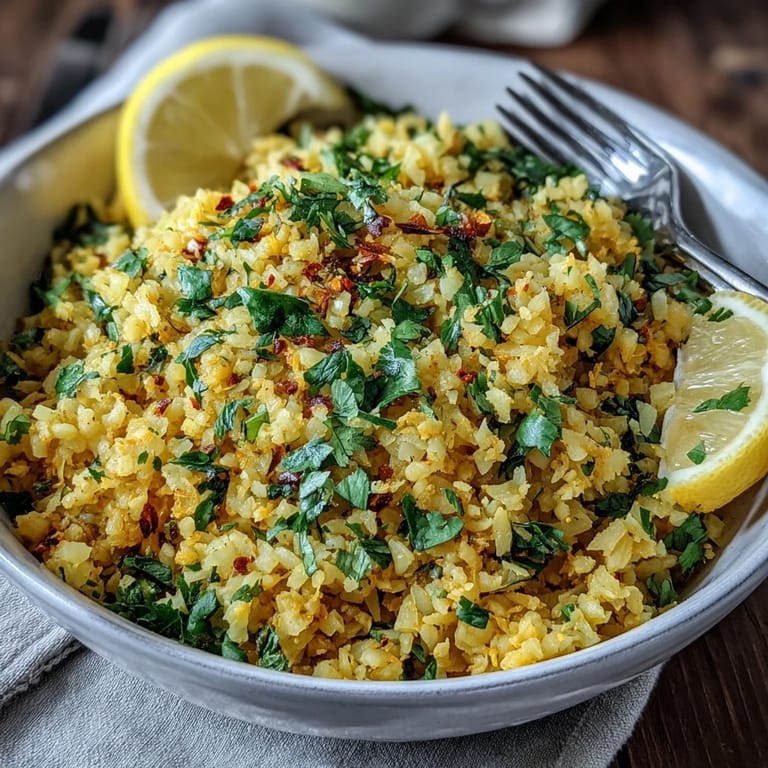
 My kitchen fills with the most unexpected golden glow when turmeric hits a hot pan, and that's become the signal that something genuinely nourishing is about to happen. One afternoon, I found myself with a head of cauliflower and a craving for something that felt both comforting and light, so I reached for my mortar and pestle and started crushing spices like I was solving a puzzle. The result was this vibrant turmeric cauliflower rice—a dish that proved you don't need complicated technique or rare ingredients to transform something simple into something you'll want to make again and again.
I made this for my partner on a Tuesday night when we were both running on empty, and watching their face when they tasted it—that moment when they realized cauliflower could taste this good—made me understand why I keep coming back to this recipe. It became our go-to when we needed something fast but didn't want to settle for takeout, and now it's just part of how we cook on weeknights.
Ingredients
- Cauliflower (1 medium head, about 600 g): The star of the show—cut it into florets first because a food processor works magic on bite-sized pieces, creating that rice-like texture that's so satisfying.
- Olive oil or coconut oil (1 tablespoon): Just enough to coat everything without making it heavy, and it carries the spices beautifully into every grain.
- Onion (1 small, finely chopped): This becomes sweet and mellow as it softens, building a flavor foundation that the spices sit on top of.
- Garlic (2 cloves, minced): Don't skip the mincing—bigger pieces can turn bitter, but tiny pieces melt into the oil and perfume the whole dish.
- Ground turmeric (1 teaspoon): The golden heart of this recipe, with its warm earthiness and anti-inflammatory reputation that makes you feel virtuous.
- Ground cumin (1/2 teaspoon): This adds a subtle nuttiness that deepens the turmeric without overpowering it.
- Black pepper (1/4 teaspoon): A small amount awakens your palate and helps your body absorb the turmeric's benefits.
- Sea salt (1/2 teaspoon): Taste as you go because salt awakens all the other flavors in ways you won't expect.
- Red chili flakes (pinch, optional): For when you want a gentle heat that lingers on your lips without shouting.
- Fresh cilantro or parsley (2 tablespoons, chopped): The final flourish that brings brightness and keeps everything from tasting heavy.
- Lemon juice (from 1/2 lemon): This is the secret ingredient that ties everything together—it cuts through richness and brings the whole dish into focus.
Tired of Takeout? 🥡
Get 10 meals you can make faster than delivery arrives. Seriously.
One email. No spam. Unsubscribe anytime.
Instructions
- Pulse the cauliflower into rice:
- Cut your cauliflower into florets and work with them in batches—trying to do it all at once just jams up the processor and defeats the purpose. You're aiming for that satisfying grain-like texture, not cauliflower dust.
- Build your flavor base:
- Warm the oil over medium heat and add your chopped onion, letting it become soft and golden for a couple of minutes before the garlic joins the party. You'll smell that transition point when everything starts smelling sweet rather than sharp.
- Toast the spices:
- Once the garlic goes in, give it just 30 seconds—any longer and it turns bitter—then add your turmeric, cumin, pepper, and chili flakes if you're using them. Cook this mixture for about a minute so the spices bloom and release their essential oils into the oil.
- Bring it all together:
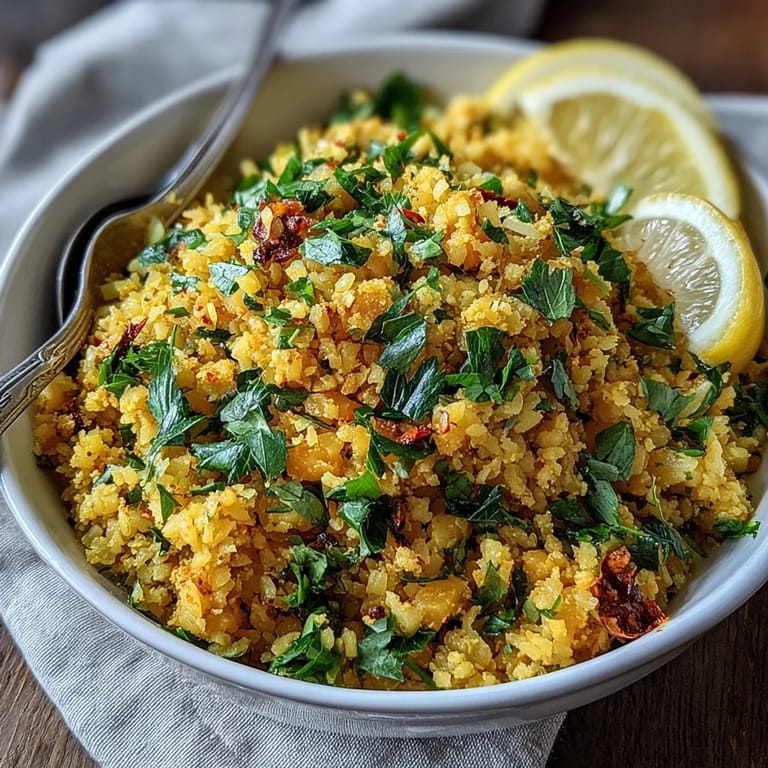
- Add your riced cauliflower and salt, stirring constantly to coat everything evenly with those beautiful golden spices. Watch it cook for 5 to 7 minutes, stirring occasionally—you want it tender with a slight bite, not mushy.
- Finish and taste:
- Turn off the heat, squeeze your lemon juice over everything, and toss through the cilantro or parsley. Taste a bite and adjust the salt or lemon to your preference—this is your moment to make it exactly right.
 Pin it
 There was a moment when I served this alongside some grilled salmon and roasted beets, and my mom took a bite and said, "This is what eating healthy actually tastes like," and I've been chasing that compliment ever since. That's when I realized this dish had become more than just a side—it became something I could be proud of.
Ways to Make It Your Own
The beautiful thing about this recipe is that it's a canvas waiting for your own interpretation. I've added everything from diced bell peppers (which soften slightly and add sweetness) to frozen peas (which stay bright green and pop between your teeth) to fresh spinach stirred in at the very end. Once I even added a handful of toasted slivered almonds for texture and a subtle nuttiness that made people ask what my secret ingredient was.
Pairing and Serving Ideas
This cauliflower rice plays beautifully with almost anything—it's the diplomatic side dish that works equally well next to Indian curries, grilled meats, roasted vegetables, or even as a bed for Buddha bowls. I've learned that it's forgiving enough to sit at room temperature for a bit without losing its charm, making it perfect for meal prep or casual entertaining. The mild flavor means it supports whatever protein or sauce you're serving rather than competing with it.
Storage and Make-Ahead Tips
This dish keeps beautifully in the refrigerator for up to three days in a covered container, and reheats gently either in a skillet over low heat or even in the microwave if you're in a rush. I actually think it tastes better the next day once all the flavors have had time to get to know each other. A helpful trick I discovered is that you can prep the riced cauliflower and chop your aromatics the night before, so you're literally just cooking when hunger strikes.
- Make extra and store individual portions in glass containers for grab-and-go meals throughout the week.
- If you're cooking for one, the recipe halves beautifully without losing any of its magic.
- Reheat gently and taste before serving—you might want to add a squeeze of fresh lemon again because the brightness fades slightly over time.
 Pin it
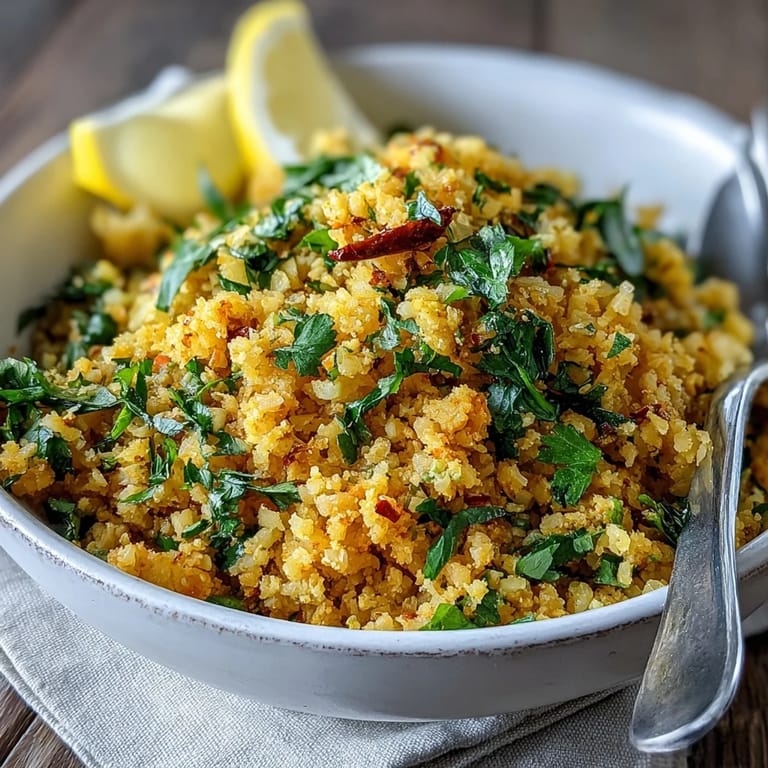
 This recipe proved to me that healthy eating doesn't mean suffering through bland food—it means finding shortcuts and flavor tricks that make nourishing yourself feel like a small celebration. Make it once and I promise you'll be making it again.
Recipe FAQs
- → What does turmeric cauliflower rice taste like?
The turmeric adds an earthy, slightly bitter note balanced by warm cumin and fresh citrus. The cauliflower itself takes on a mild, nutty flavor when sautéed, while the garlic and onion provide aromatic depth. The overall taste is light, warming, and pleasantly spiced without being overpowering.
- → Can I make this ahead of time?
Yes, you can prepare the riced cauliflower up to 2-3 days in advance and store it in the refrigerator. Cook the dish just before serving for the best texture, as reheated cauliflower can become slightly softer. The flavors actually develop and intensify overnight, making it excellent for meal prep.
- → What can I serve with turmeric cauliflower rice?
This pairs beautifully with Indian curries, grilled chicken or fish, roasted vegetables, or alongside hearty legumes like lentils and chickpeas. It also works as a base for grain bowls or topped with fried eggs for a quick breakfast.
- → Do I need a food processor?
A food processor makes quick work of ricing the cauliflower, but you can also use a box grater with the medium holes. The grater method takes a bit more effort but produces similar results. Just be gentle to avoid turning the cauliflower into mush.
- → How do I prevent the cauliflower from becoming mushy?
Avoid overcrowding the pan and resist stirring too frequently. Cook over medium heat and keep an eye on the texture—remove from heat while the cauliflower still has some bite, as it will continue cooking slightly from residual heat. Working in batches helps maintain even cooking.