 Pin it
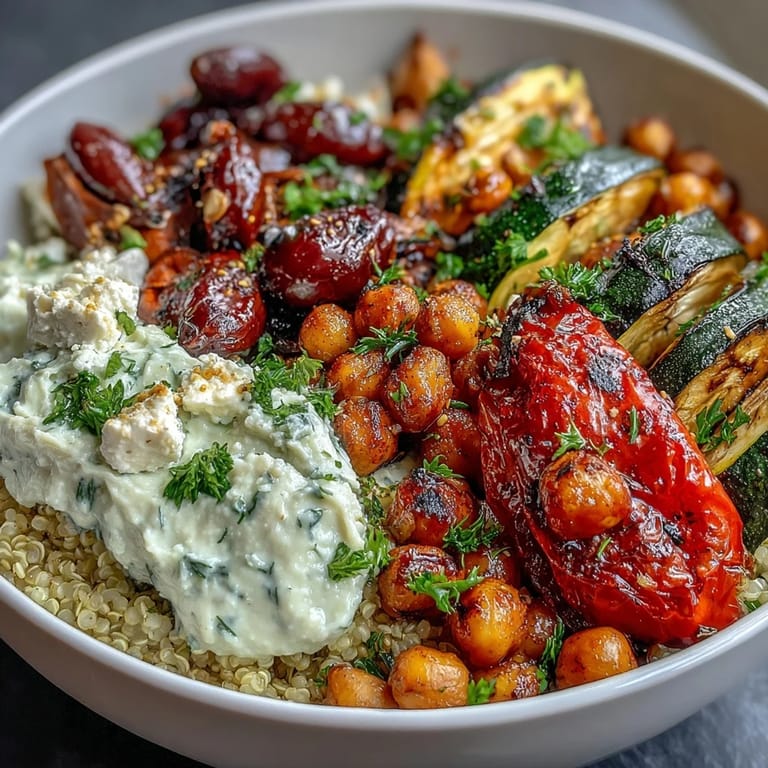
 There's something about assembling a Buddha bowl that feels less like cooking and more like creating edible art. One Wednesday afternoon, I was standing in my kitchen staring at a collection of half-used ingredients—some roasted vegetables, a tin of chickpeas, leftover quinoa—and instead of making the usual grain salad, I decided to build everything into one glorious bowl. The moment I drizzled that hummus across the top and watched it swirl into the warm quinoa, I realized I'd stumbled onto something that would become my go-to meal for the next three months.
I made this for a friend who'd just started eating more plant-based, and she was skeptical until she took the first bite. The way the warm quinoa softened the feta, how the Greek yogurt cut through the earthiness of the chickpeas—she actually asked for the recipe before finishing her bowl. That's when I knew this wasn't just another trendy lunch; it was something that could genuinely change how people thought about vegetarian eating.
Ingredients
- Quinoa, rinsed: Rinsing removes the bitter coating and prevents your grains from tasting soapy—don't skip this step, it genuinely makes a difference.
- Water: Use the standard 2:1 ratio for fluffy, separate grains that don't clump together.
- Zucchini and red bell pepper: These vegetables caramelize beautifully at high heat and become naturally sweet; the key is chopping them into similar sizes so they cook evenly.
- Red onion, sliced: The raw sharpness mellows as it roasts, creating this wonderful balance between bite and sweetness.
- Cherry tomatoes: Halving them exposes more surface area for that gorgeous roasting, and they burst slightly during cooking.
- Olive oil: Use good quality oil here since it's not being cooked down—it carries flavor directly onto everything.
- Dried oregano and ground cumin: These spices transport the vegetables straight to the Mediterranean; the oregano blooms in the heat while the cumin adds subtle earthiness.
- Salt and black pepper: Don't underseason the roasted vegetables—they need enough salt to taste like something special.
- Chickpeas, drained and rinsed: Warming them briefly makes them taste fresher than eating them straight from the can, and it helps them absorb seasonings.
- Kalamata olives: Pitting them yourself takes two minutes but gives you fresher flavor than the pre-pitted versions.
- Hummus: This is your creamy binding agent and source of tahini richness; store-bought works perfectly here.
- Greek yogurt: It adds tang and creaminess while keeping the bowl feeling light rather than heavy.
- Feta cheese, crumbled: The saltiness is intentional—it's meant to brighten and punctuate every bite rather than melt into the background.
- Fresh parsley: Added at the very end so it stays vibrant green and fresh-tasting rather than wilting into the warm ingredients.
- Lemon wedges: Squeeze these over your finished bowl to add brightness and tie all the flavors together.
Tired of Takeout? 🥡
Get 10 meals you can make faster than delivery arrives. Seriously.
One email. No spam. Unsubscribe anytime.
Instructions
- Heat your oven to 425°F and prepare your vegetables:
- Chop your zucchini, bell pepper, and red onion into bite-sized pieces roughly the same size so they roast evenly. This is the moment to handle the cherry tomatoes gently—halve them and set aside so they don't get overhandled.
- Toss vegetables with oil and seasonings:
- Drizzle everything with olive oil and sprinkle with oregano, cumin, salt, and pepper. Use your hands to toss them together—you want every piece coated and glistening, not swimming in oil.
- Roast until caramelized:
- Spread vegetables on a baking sheet in a single layer. After about 12 minutes, stir them around—this is when you'll notice the edges turning golden. Continue roasting for another 8-13 minutes until you see some browning and the vegetables have softened.
- Start the quinoa while vegetables roast:
- Rinse your quinoa under cold water until the water runs clear, then combine with 2 cups fresh water in a saucepan. Bring to a boil, then immediately reduce heat to the lowest setting, cover with a lid, and let it sit for 15 minutes.
- Let quinoa rest and fluff:
- Remove from heat but keep the lid on for 5 minutes—this finishing rest time is crucial for fluffy, separate grains. After 5 minutes, fluff gently with a fork.
- Warm your chickpeas:
- Pour drained chickpeas into a small skillet over medium heat and warm for 2-3 minutes, stirring occasionally. This step tastes small, but warm chickpeas absorb flavor better and create better texture contrast with cold toppings.
- Build your bowls:
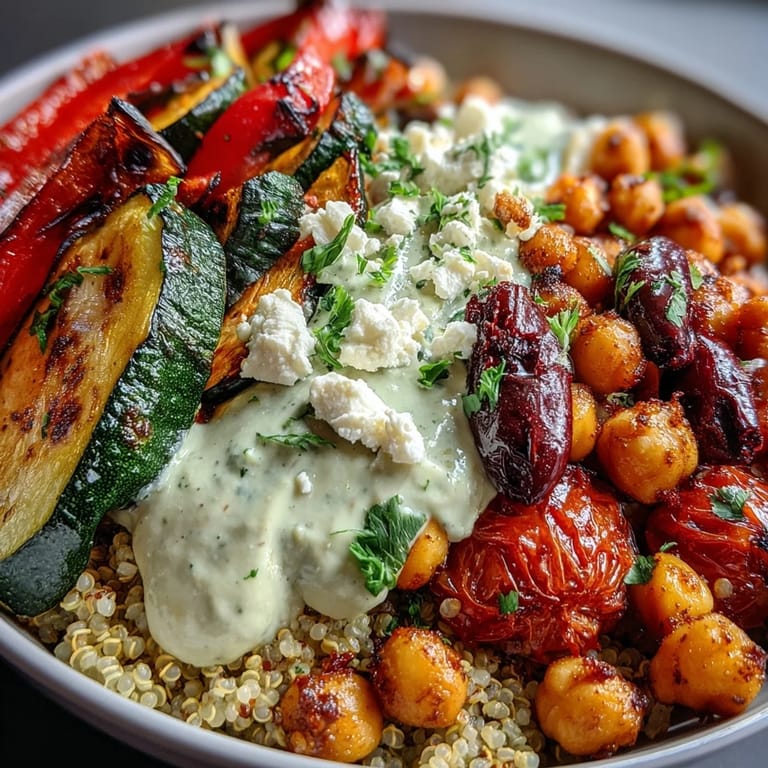
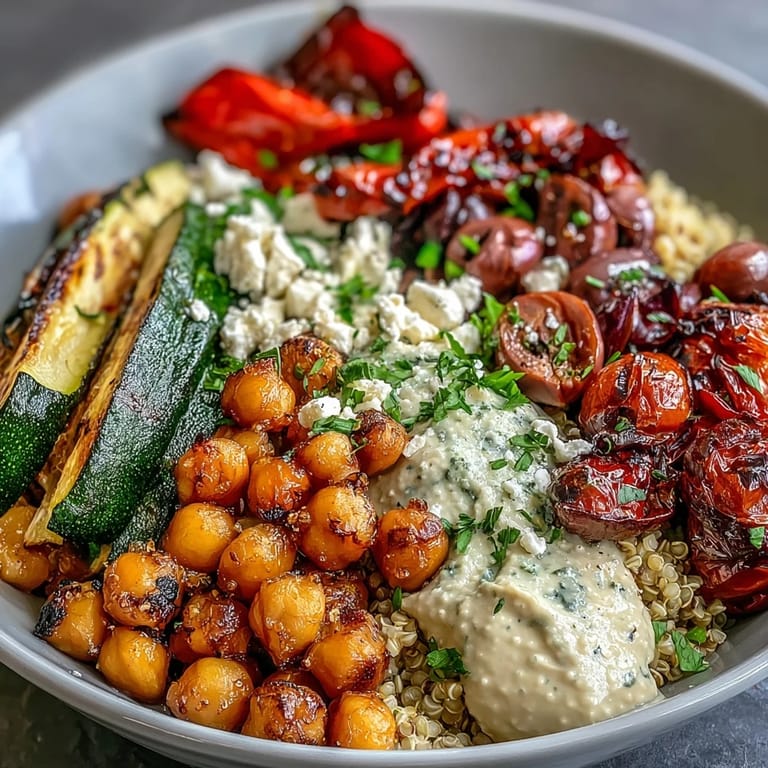
- Divide warm quinoa evenly among your four bowls. Arrange roasted vegetables, warm chickpeas, olives, hummus, Greek yogurt, and feta in sections around each bowl—this isn't random; the visual arrangement makes the eating experience feel special.
- Finish and serve:
- Scatter fresh parsley over everything and serve with lemon wedges on the side. Let people squeeze lemon directly into their bowl right before eating.
 Pin it
 My favorite moment with this bowl happened when my teenage nephew, who usually picks his way through food, took one bite and asked if he could eat it for dinner three nights in a row. Watching someone discover that healthy food doesn't have to taste boring or feel like punishment—that's when this recipe stopped being just a recipe for me.
Why This Bowl Works So Well
The genius of a Buddha bowl is that it lets each ingredient shine while creating something cohesive. The warm quinoa brings everything together as a base, the roasted vegetables add concentrated flavor, and the cool toppings—hummus, yogurt, feta—create textural contrast. You're not mixing everything into homogeneity like a salad; you're creating layers of flavor and temperature that work together without losing their individual identities.
Making It Your Own
This bowl is genuinely forgiving about substitutions. I've swapped brown rice for quinoa when I was out, used green beans instead of zucchini when that's what needed using, and even added grilled chicken breast when I wanted extra protein. The formula stays the same: a grain base, roasted vegetables, legumes, something tangy and creamy, a cheese or nut component, and fresh herbs to brighten everything at the end.
Timing and Meal Planning
This bowl actually gets better as leftovers, though you want to store components separately and assemble fresh. The roasted vegetables keep for four days, the quinoa lasts five days, and the hummus and yogurt are fine for at least a week. Build your bowls fresh each morning if you're meal prepping, and everything tastes like you just made it. This approach saves time during busy mornings without sacrificing quality.
- Prep your vegetables the night before and they'll roast faster the next day since you're not doing knife work when rushed.
- Cook a big batch of quinoa once and portion it into containers—it's the foundation that takes the longest.
- Keep your toppings separated until assembly so nothing gets soggy or loses its texture.
 Pin it
 This Mediterranean Buddha bowl has become the recipe I recommend to friends who want to eat better but don't know where to start. It proves that nourishing food doesn't require complicated techniques or hard-to-find ingredients.
Recipe FAQs
- → Can I make this bowl ahead of time?
Absolutely. Prepare all components separately and store in airtight containers for up to 4 days. Keep the quinoa, roasted vegetables, and chickpeas refrigerated. Assemble individual bowls when ready to eat, adding fresh toppings like parsley and lemon just before serving.
- → What other grains work well in this bowl?
Farro, brown rice, or even bulgur make excellent alternatives to quinoa. Each grain brings its own texture and cooking time, so adjust accordingly. Bulgur cooks fastest, while brown rice takes longer than quinoa.
- → How do I roast vegetables for the best flavor?
Spread vegetables in a single layer on the baking sheet without overcrowding. This allows proper caramelization. Toss with olive oil and spices before roasting at high heat. Flip halfway through for even browning.
- → Can I use different vegetables?
Certainly. Eggplant, sweet potatoes, cauliflower, or carrots roast beautifully with these Mediterranean spices. Adjust cooking times slightly—denser vegetables like sweet potatoes may need a few extra minutes.
- → What makes a good protein addition?
Grilled chicken, lemon-herb shrimp, or baked salmon pair wonderfully with these flavors. For plant-based options, try marinated tofu, roasted tempeh, or additional legumes like lentils alongside the chickpeas.
- → How can I make this completely dairy-free?
Replace Greek yogurt with coconut yogurt or a dairy-free alternative. Skip the feta cheese or use a vegan feta made from almonds or tofu. The hummus provides plenty of creaminess on its own.