 Pin it
 There's something about the sound of vegetables hitting a hot wok that never gets old. My neighbor lent me her wok one Tuesday evening, and I was determined to figure out what I'd been missing all those years of using a regular skillet. The moment I got the ginger and garlic in there, my entire kitchen smelled like an actual restaurant, and I realized I'd been cooking stir-fries all wrong. Now I can't imagine making this any other way.
I made this for my sister last spring when she was going through a phase of trying to eat more vegetables. She showed up skeptical, honestly—she's not usually a greens person—but after one bite she kept asking if I could make it again next week. That's when I knew this recipe had something special, this ability to make people who normally avoid vegetables actually crave them.
Ingredients
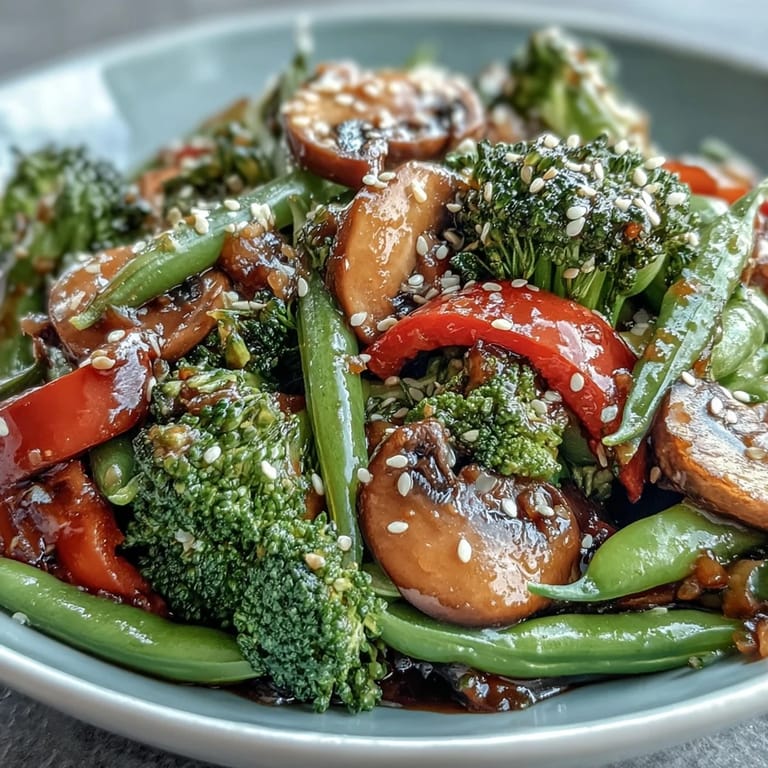
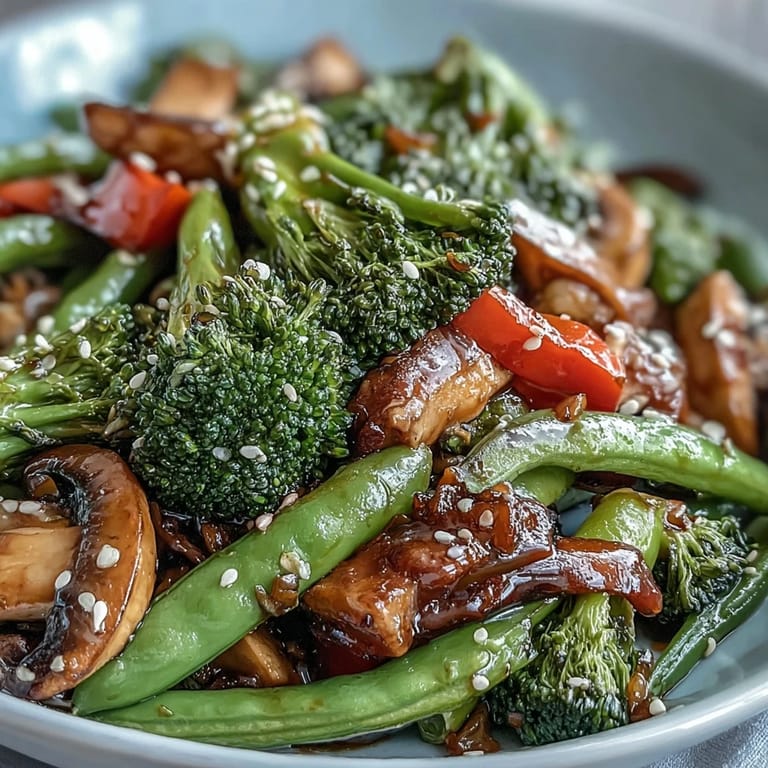
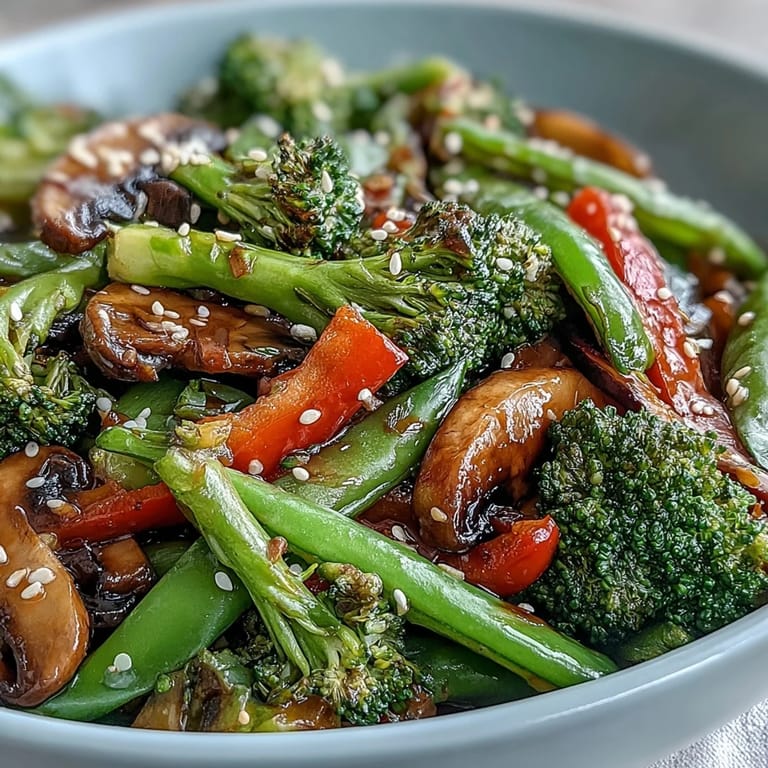
- Broccoli florets: Cut them into bite-sized pieces so they cook evenly and get slightly charred at the edges, which brings out their natural sweetness.
- Sliced carrots: Slice them on a slight bias to increase surface area and help them soften without becoming mushy in the brief cooking time.
- Red bell pepper: The sweetness balances the savory soy and sharp ginger, and it adds a pop of color that makes the whole dish feel more alive.
- Snap peas: These stay crisp even with high heat and add a delicate crunch that contrasts beautifully with the softer vegetables.
- Yellow onion: Slice it thin so it cooks quickly and distributes its sweetness throughout the dish without overpowering other flavors.
- Sliced mushrooms: They soak up the sauce like little flavor sponges and add an earthy depth that ties everything together.
- Fresh ginger: Grate it just before cooking so it's at its most pungent and aromatic; pre-grated ginger sits in jars losing its magic.
- Garlic: Mince it finely so it disperses evenly and doesn't leave you with big chunks that overpower individual bites.
- Soy sauce: Use tamari if you need to avoid gluten, and don't skip the tamari option just because you think regular soy sauce is standard—once you go tamari, the flavor difference is noticeable.
- Sesame oil: A little goes a long way; this oil has an assertive, toasty flavor that makes the whole dish taste intentional and complete.
- Vegetable oil: Use a neutral oil with a high smoke point so it can handle the heat without burning or imparting unwanted flavors.
- Rice vinegar: It adds brightness and keeps the sauce from tasting one-dimensional or overly salty.
- Maple syrup or honey: This tiny bit of sweetness balances the salt and acid, and it helps the sauce coat the vegetables with a subtle gloss.
- Red pepper flakes: Leave them out if you're cooking for people who don't like heat, or add them generously if you want this dish to wake you up.
- Green onions and toasted sesame seeds: These aren't just garnish; they're the finishing touch that makes people notice and compliment your cooking.
Tired of Takeout? 🥡
Get 10 meals you can make faster than delivery arrives. Seriously.
One email. No spam. Unsubscribe anytime.
Instructions
- Make your sauce first:
- Whisk soy sauce, rice vinegar, maple syrup, and red pepper flakes together in a small bowl and set it aside so you're not scrambling for it later when everything is cooking fast. This is your secret weapon for keeping the rhythm smooth.
- Get your oil smoking:
- Heat vegetable oil and sesame oil in your wok or large skillet over medium-high heat until you see the oil shimmer and move like water—this usually takes about a minute. The heat is what makes stir-frying actually work instead of just cooking vegetables slowly in a pan.
- Toast the aromatics:
- Add ginger and garlic and stir constantly for about 30 seconds until the smell hits you like a wave; this quick stir-fry builds flavor fast. Don't let them sit still or they'll burn and taste bitter instead of fragrant.
- Start with the slower vegetables:
- Add onion, carrots, and broccoli first because they need more time to soften; toss everything together for 2 to 3 minutes using a wooden spoon or spatula to keep things moving. The constant motion is what keeps vegetables from sticking and ensures even cooking.
- Add the quick-cooking vegetables:
- Toss in bell pepper, snap peas, and mushrooms and keep stirring for another 3 to 4 minutes until the vegetables look crisp-tender and the broccoli has some light brown spots. You want them cooked through but still with a little resistance when you bite down.
- Pour in the sauce and toss:
- Add your prepared sauce to the wok and toss everything for about 1 to 2 minutes until every vegetable is coated and the sauce has warmed through. The heat will bring the flavors together into something cohesive and delicious.
- Finish and serve:
- Take it off the heat, sprinkle green onions and toasted sesame seeds on top, and serve immediately over rice or noodles while everything is still steaming hot. The longer it sits, the more the vegetables soften, so timing is everything.
 Pin it
 My dad came into the kitchen while I was cooking this one afternoon and just stood there watching without saying much, which is unusual for him. After we ate, he told me this was the first time in years he felt like vegetables were actually the main event instead of just something on the side of his plate.
Why This Recipe Changed My Cooking
Before I started making stir-fries regularly, I thought high-heat cooking was intimidating and something only restaurant chefs could pull off. But once I realized that high heat is actually your friend here—it's what keeps vegetables from becoming a soggy, overcooked mess—I started applying this principle to other quick-cooking dishes. The confidence I gained from this simple recipe opened up a whole world of faster, fresher meals.
The Right Equipment Makes All The Difference
You don't need to spend a fortune on a wok; a large skillet with high sides works just fine and honestly might be easier to manage if you've never stir-fried before. What matters more is having a tool with enough surface area to keep your vegetables in contact with the hot pan instead of piling on top of each other. I use a wooden spoon because it doesn't scratch the surface and it gives me better control when tossing.
Customizing This For Your Pantry
The beauty of this recipe is that it works with almost any vegetable combination you have on hand. I've made it with asparagus, bok choy, cauliflower, and even leftover roasted vegetables when I was feeling creative. The sauce and technique are what make it taste intentional, so don't stress about having the exact vegetables listed here.
- Add tofu, tempeh, or chickpeas if you want extra protein and substance to make this a complete meal.
- Serve it over rice, noodles, or even cauliflower rice if you're going lower-carb.
- Make a double batch of the sauce and keep it in the fridge so you can throw this together on nights when you're completely exhausted.
 Pin it
 This recipe has become my go-to meal when I want something that feels homemade and healthy but doesn't require hours in the kitchen or a pile of dishes afterward. It's proof that simple cooking, done with care and the right technique, is sometimes exactly what you need.
Recipe FAQs
- → Can I make this gluten-free?
Yes, simply substitute regular soy sauce with gluten-free tamari to make this dish completely gluten-free while maintaining the same delicious flavor profile.
- → How do I prevent vegetables from becoming mushy?
Keep the heat at medium-high and stir-fry in batches if needed. Cook vegetables just until crisp-tender—about 5-7 minutes total—to maintain their texture and vibrant color.
- → Can I add protein to this dish?
Absolutely! Cubed tofu, tempeh, or edamame work wonderfully. Add protein along with the vegetables or stir-fry separately and combine at the end.
- → What vegetables work best for stir-frying?
Broccoli, carrots, bell peppers, snap peas, and mushrooms are excellent choices. Other great options include bok choy, zucchini, snow peas, and baby corn.
- → How should I store leftovers?
Store cooled leftovers in an airtight container in the refrigerator for up to 3 days. Reheat gently in a skillet or microwave, though the vegetables will be softer than freshly made.