 Pin it
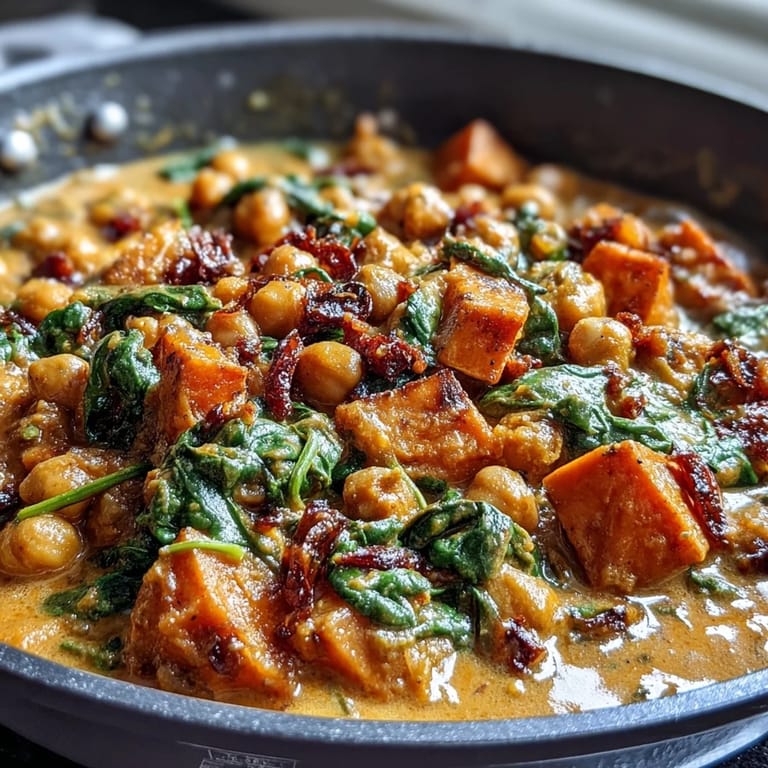
 There's a particular Tuesday evening that comes to mind whenever I make this curry—the kind of night when you're standing in front of the pantry, slightly tired, and you realize you have everything you need for something genuinely delicious already sitting there. The coconut milk, the sweet potato starting to sprout in the crisper drawer, a can of chickpeas that's been waiting for its moment. What started as a simple dinner solution became something I now make when I want the kitchen to smell like warmth, when I need a meal that feels both nourishing and effortless.
I made this for a friend who'd just gone vegan, and I'll never forget the surprise on her face when she took that first bite—the kind of moment where you realize comfort food doesn't need butter or cream to be deeply satisfying. She's made it at least a dozen times since, and each time she texts me a photo of her own variation with some new vegetable she's added. That's when you know a recipe has truly landed.
Ingredients
- Sweet potato: Cut into half-inch cubes so they cook evenly and get creamy inside while holding their shape, creating little pockets of sweetness throughout the curry.
- Yellow onion: The foundation that'll turn golden and soft, releasing all its natural sweetness as it caramelizes just slightly in the heat.
- Fresh spinach: Add it at the very end so it wilts into silky strands without turning dark and bitter—roughly chop it to make stirring easier.
- Garlic and fresh ginger: These two wake up the entire dish; mince them fine so they distribute evenly and bloom properly in the hot oil.
- Chickpeas: Drain and rinse them well so you're not adding extra starch or sodium to your sauce; they'll add protein and a satisfying texture.
- Full-fat coconut milk: Don't skip the full-fat version—it's the soul of this curry, creating that luscious, velvety sauce that coats every vegetable.
- Vegetable broth: This keeps the sauce from becoming too thick while letting all the spice flavors shine without overwhelming the dish.
- Curry powder: The heart of the flavor here; I use mild to let the other spices layer in naturally, but adjust to your preference.
- Cumin, turmeric, and cayenne: These three create depth and warmth; the turmeric adds earthiness while cayenne whispers heat in the background if you choose to use it.
- Lime juice: Don't forget this final squeeze—it cuts through the richness and brightens everything just before serving.
- Coconut oil: Use it for its subtle flavor that complements the spices, though vegetable oil works if that's what you have on hand.
Tired of Takeout? 🥡
Get 10 meals you can make faster than delivery arrives. Seriously.
One email. No spam. Unsubscribe anytime.
Instructions
- Warm your pan and start with aromatics:
- Heat the coconut oil in your large skillet over medium heat until it's shimmering—you'll notice the kitchen immediately smells warm. Add the chopped onion and let it soften for about three to four minutes, stirring occasionally, until it turns translucent and sweet.
- Build flavor with garlic and ginger:
- Once the onion is soft, add your minced garlic and grated ginger, stirring constantly for about a minute—this is when the aroma becomes almost intoxicating. You'll know you're at the right moment when the raw edge disappears and the smell becomes fragrant rather than sharp.
- Coat the sweet potatoes in spice:
- Add your cubed sweet potatoes along with the curry powder, cumin, turmeric, cayenne if using, salt, and pepper. Stir everything together so the potatoes get coated in those golden spices and the whole mixture becomes fragrant.
- Build the creamy sauce:
- Pour in the coconut milk and vegetable broth, stirring well to combine everything into a cohesive sauce. Bring it to a gentle simmer—not a rolling boil, just steady bubbles breaking the surface.
- Let the sweet potatoes become tender:
- Cover your skillet and let everything cook for about twelve to fifteen minutes, stirring occasionally to ensure even cooking. The sweet potatoes will go from firm to fork-tender, and the sauce will start to smell even more incredible as everything melds together.
- Add protein and warmth:
- Stir in the drained chickpeas and cook for another five minutes just to heat them through and let them absorb some of that coconut-curry flavor.
- Finish with brightness:
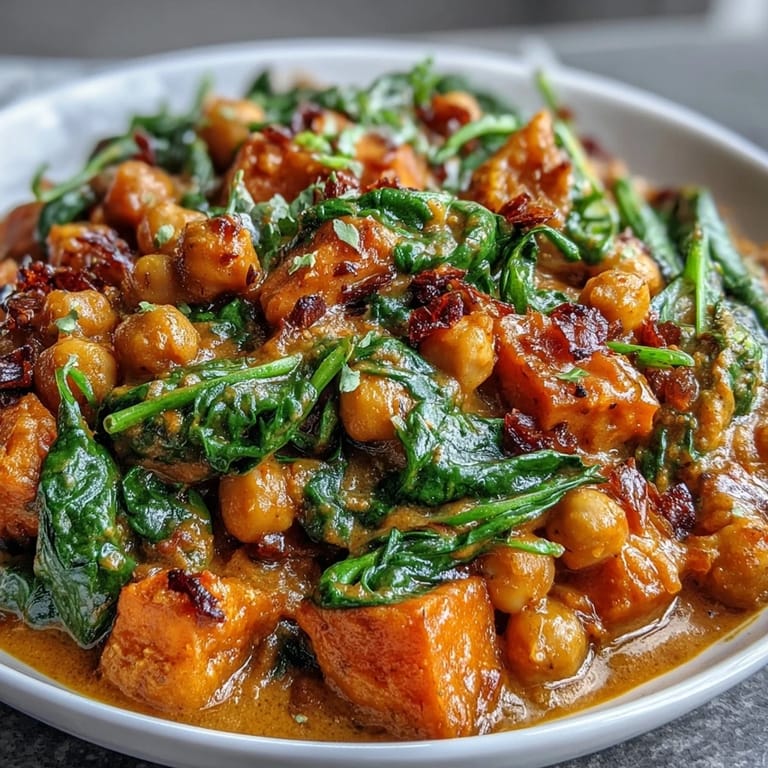
- Add your chopped spinach and cook for two to three minutes, stirring gently, until it wilts into dark, silky strands throughout the curry. Remove from heat and squeeze in the lime juice, then taste and adjust the salt and pepper to your preference.
 Pin it
 There's something magical about watching someone take a spoonful of this curry for the first time—that moment where they close their eyes for a second because everything hits at once: the sweetness of the potato, the warmth of the spices, the unexpected creaminess. It's the kind of dish that reminds you why cooking matters beyond just nutrition.
Customizing Your Curry
One of my favorite things about this recipe is how endlessly adaptable it is to what you have and what you're craving. I've made it with butternut squash when sweet potatoes were out of season, and it turned out just as wonderful with that earthier sweetness. The spinach can become kale if you prefer something heartier, or even Swiss chard if that's what's in your fridge—just remember that tougher greens need an extra minute to cook.
Serving Suggestions That Actually Work
I've served this over basmati rice more times than I can count, but I've also discovered it's equally at home on top of quinoa for a different textural experience. Naan bread is wonderful for scooping up every last bit of sauce, though plain white rice lets the curry flavors take center stage. Whatever you choose, always serve it hot with those lime wedges and cilantro on the side so people can adjust the brightness to their own taste.
Making It Your Own
The first time I made this, I added a can of chickpeas and thought that was enough protein, but then I experimented with crumbled tofu and tempeh and discovered that slight variation completely changes the texture in interesting ways. I've also learned that how finely you chop the ginger actually matters—finer means the flavor distributes more evenly throughout the sauce, while chunkier pieces give you concentrated hits of ginger spice.
- For extra heat without overwhelming the dish, add cayenne gradually and taste between additions rather than dumping it all in at once.
- If you find the sauce too thick, a splash of vegetable broth at the end brings it back to that perfect consistency.
- Leftovers taste even better the next day as the flavors deepen, so don't hesitate to make this ahead.
 Pin it
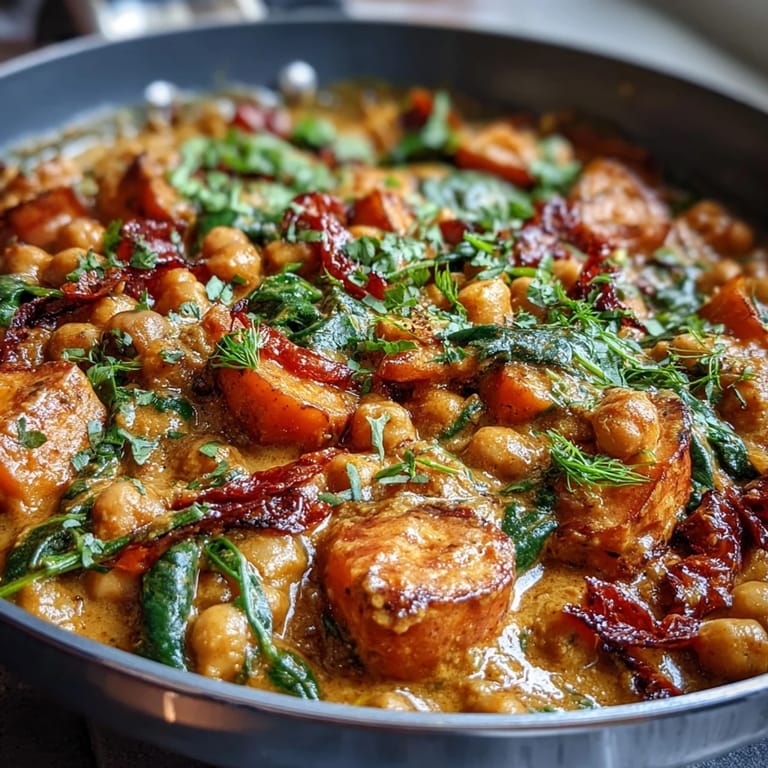
 This curry has become my answer to those nights when I want something that feels like a hug in a bowl, and the fact that it's vegan and gluten-free means I can feed it to almost anyone. There's real magic in how simple ingredients become something so deeply satisfying.
Recipe FAQs
- → What can I substitute for chickpeas?
Try cubed tofu or tempeh for added protein and texture while keeping the dish hearty and balanced.
- → Can I use other greens instead of spinach?
Kale or Swiss chard work well as alternatives, providing similar nutrition and texture in the curry.
- → How do I adjust the spice level?
Modify the amount of cayenne pepper or curry powder to suit your preferred heat tolerance.
- → Is this dish suitable for gluten-free diets?
Yes, all ingredients are naturally gluten-free, but ensure any broth or spice blends are free of gluten additives.
- → What are good side options?
Serve with basmati rice, quinoa, or warm naan bread to soak up the flavorful sauce.