 Pin it
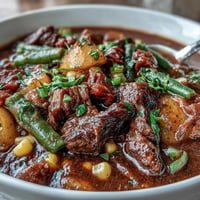
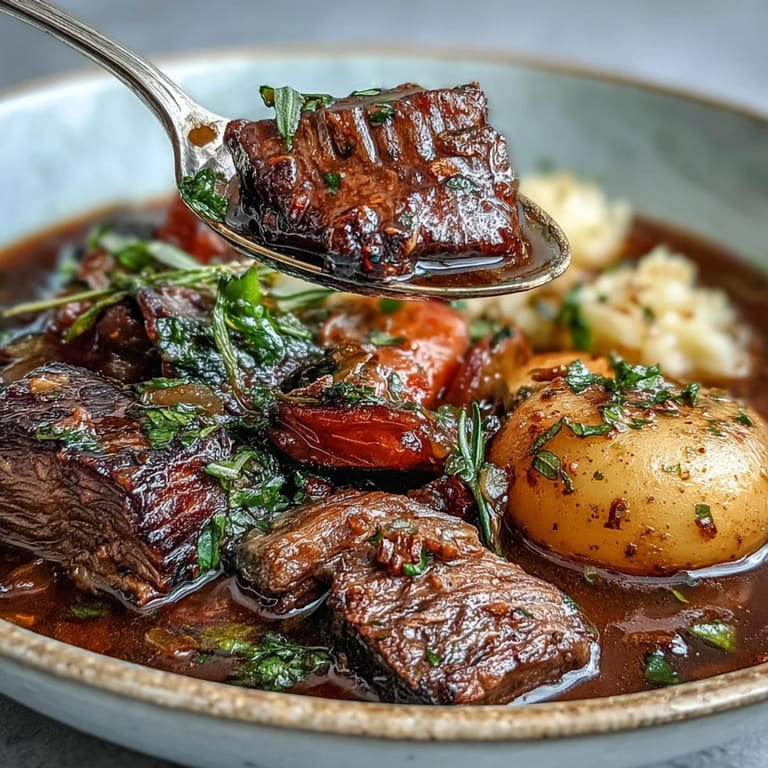
 There's something about the sound of beef hitting a hot skillet that signals comfort is on the way. I discovered this stew on a particularly gray November afternoon when my kitchen felt too quiet and the weather demanded something substantial—something that would fill the house with warmth for hours. The slow cooker became my quiet companion that day, transforming simple ingredients into something deeply nourishing without requiring much attention. It's the kind of dish that works whether you're cooking for yourself or feeding a crowd of people who show up unexpectedly on a cold evening.
I made this for my neighbors during their move-in week, and watching their faces when they opened the container—that moment told me everything. The stew had traveled well, the flavors had deepened overnight in the fridge, and suddenly we were all sitting on their half-assembled kitchen table, passing around bowls and talking like old friends. Food has this strange power to break down awkwardness, and this particular stew seemed to unlock it.
Ingredients
- Beef chuck, cut into 1.5-inch cubes (2 lbs/900 g): This cut contains just enough fat and connective tissue to become impossibly tender during low and slow cooking; avoid lean cuts that turn tough.
- Kosher salt and black pepper (1/2 tsp each): Season the meat before searing to develop a flavorful crust that carries through the whole dish.
- Carrots, peeled and cut into 1-inch pieces (3 large): Cut them uniformly so they cook at the same rate and become silky rather than mushy.
- Parsnips, peeled and sliced (2 medium): These add an earthy sweetness that regular potatoes can't quite replicate; don't skip them.
- Yukon Gold potatoes, peeled and chopped into chunks (2 large): Their waxy texture keeps them from falling apart, and they absorb the broth beautifully.
- Yellow onion, diced (1 large): Onion practically disappears into the sauce, providing base-level savory depth.
- Celery stalks, sliced (3 stalks): Celery is the quiet backbone of any good stew broth, adding subtle vegetal complexity.
- Garlic, minced (3 cloves): Mince it fresh rather than using jarred; the difference in brightness is noticeable.
- Tomato paste (2 tbsp): This concentrates umami and adds gentle acidity that balances rich beef.
- Worcestershire sauce (1 tbsp): A small amount deepens the savory profile without making the stew taste like a condiment bottle.
- Bay leaf, dried thyme, and dried rosemary (1 bay leaf, 1 tsp each herb): These three herbs create the backbone of traditional stew seasoning and develop complexity over hours.
- Beef broth (4 cups/950 ml): Use good quality broth; it becomes the soul of your stew, so don't default to the cheapest option.
- Dry red wine (1 cup/240 ml): Wine adds subtle tannins and depth; if you skip it, use more broth instead.
- Cornstarch and cold water (2 tbsp each): This slurry thickens the stew at the end without adding flour or making it cloudy.
Tired of Takeout? 🥡
Get 10 meals you can make faster than delivery arrives. Seriously.
One email. No spam. Unsubscribe anytime.
Instructions
- Season and sear your beef:
- Pat the beef cubes dry with paper towels, then coat them generously with salt and pepper. Heat your skillet over medium-high heat until it's almost smoking, then add beef in a single layer—you'll hear that satisfying sizzle immediately.
- Build a golden crust:
- Let the beef sit undisturbed for about 3 minutes per side so it develops deep brown color, which adds flavor to the entire stew. Work in batches so you're not crowding the pan; you want sear, not steam.
- Transfer and layer your vegetables:
- Move the browned beef to your slow cooker, then add carrots, parsnips, potatoes, onion, and celery in a relatively even layer. The vegetables will release moisture and cook down substantially.
- Create your flavor foundation:
- Stir in minced garlic, tomato paste, Worcestershire sauce, bay leaf, thyme, and rosemary directly into the vegetable mixture. Take a moment to smell it—this is where the magic begins.
- Add your liquid:
- Pour beef broth and red wine over everything, then stir gently to combine and distribute the herbs. The liquid should come up to nearly cover the beef and vegetables.
- Set and forget:
- Cover your slow cooker and cook on low for 8 hours, or until beef is fork-tender and vegetables have softened completely. You'll start noticing the aroma after about 4 hours.
- Thicken your stew:
- Mix cornstarch and cold water in a small bowl until smooth, then stir this slurry into the hot stew. Switch to high heat and cook uncovered for 15 minutes, stirring occasionally, until the broth becomes glossy and coats the back of a spoon.
- Finish and taste:
- Remove the bay leaf, then taste and adjust salt and pepper as needed. Some people like an extra pinch of thyme or a dash more Worcestershire at this stage.
 Pin it
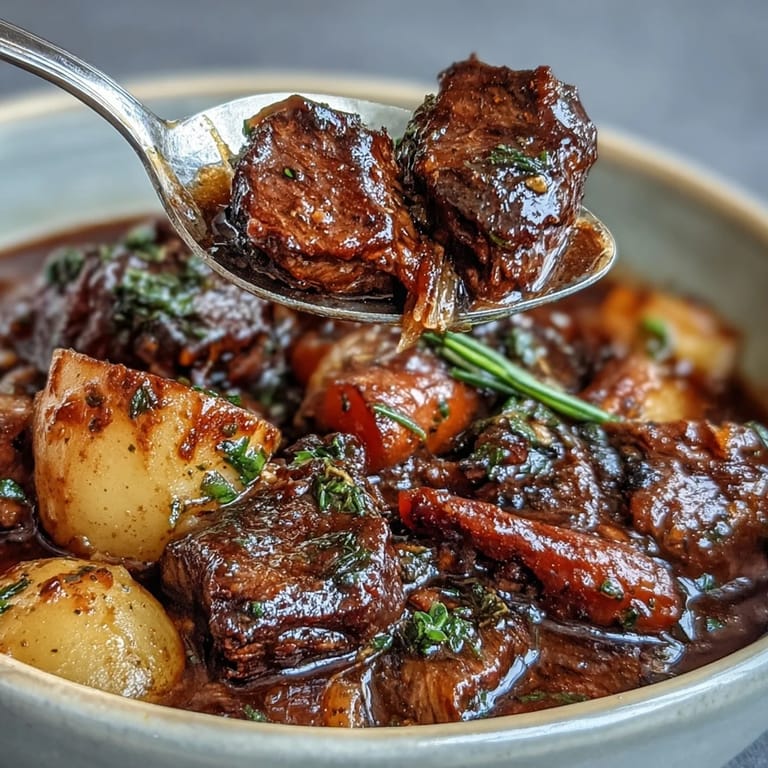
 My sister brought her two kids over one winter evening when she needed a break from the usual routine, and watching them eat this stew without complaint—kids who normally pick at everything—made me realize how honest this dish is. There's no pretense in a bowl of beef stew, just real food that reminds you why people gather around tables in the first place.
Variations That Actually Work
The beauty of this stew is how adaptable it becomes once you understand the core technique. I've added mushrooms in the last hour of cooking and watched them turn silky and absorb the broth like tiny flavor sponges. Frozen peas stirred in at the very end add brightness without falling apart, and sometimes I'll substitute half the Yukon Golds with sweet potatoes when I want something a bit sweeter and more interesting.
Serving and Storage Wisdom
This stew improves over time as flavors settle and deepen, so don't hesitate to make it a day or two ahead. Crusty bread is the obvious choice for soaking up every drop, though I've also ladled it over mashed potatoes, egg noodles, or even creamy polenta when I wanted something more substantial.
Making It Your Own
The framework here is sturdy enough to handle your preferences and whatever vegetables look good at your market. Replace the wine with more broth if alcohol isn't your thing, or swap parsnips for turnips if that's what you find. Dried oregano works if rosemary isn't calling to you, and a splash of balsamic vinegar in the final moments adds complexity if the stew tastes flat.
- Always taste before serving—slow cookers vary in temperature, and seasoning needs sometimes shift.
- Leftover stew freezes beautifully for up to three months in an airtight container.
- If the stew seems too thick after thickening, you can always thin it with a splash more broth.
 Pin it
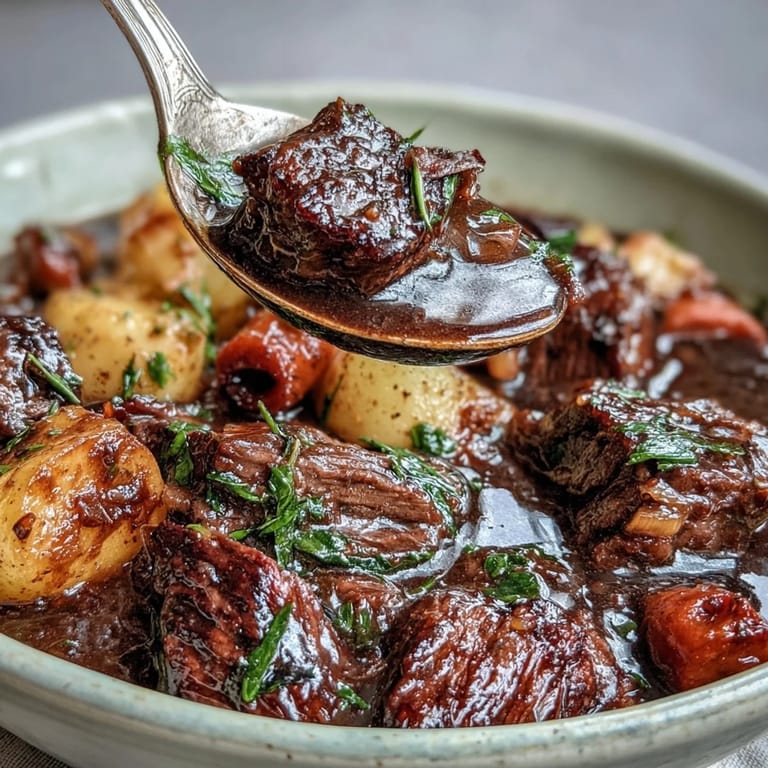
 This stew has become my go-to gift for friends during difficult seasons, because sometimes what people need isn't advice or sympathy—it's something warm and uncomplicated to reheat. It's the kind of cooking that teaches patience and rewards you with something far greater than the sum of its parts.
Recipe FAQs
- → What cut of beef works best for this stew?
Beef chuck is ideal due to its marbling and tenderness after slow cooking, ensuring flavorful, juicy bites.
- → Can I substitute the root vegetables?
Yes, sweet potatoes can replace Yukon Gold potatoes, and adding mushrooms or peas near the end adds extra depth.
- → How long should the stew cook in the slow cooker?
Cooking on low for 8 hours allows the beef and vegetables to become tender and fully infused with flavors.
- → What thickening method is used for the stew?
A cornstarch slurry mixed with cold water is stirred in and cooked briefly to achieve a rich, thick consistency.
- → Is it possible to make this without alcohol?
Yes, simply omit the red wine and replace it with additional beef broth for a similar depth without alcohol.
- → How can I enhance the flavor further?
Adding mushrooms or frozen peas during the last hour of cooking introduces more texture and complexity.