 Pin it
 My neighbor showed up at our door one October afternoon with a basket of candy apples, their red shells catching the sunlight like little edible jewels. I bit into one and realized I'd been missing out on something wonderfully simple—just sugar, corn syrup, and a bit of magic happening in a saucepan. That night I decided to make them myself, and the whole kitchen filled with the warm smell of caramelizing sugar. Now whenever I coat an apple in that glossy red shell, I'm transported back to that moment of pure, uncomplicated joy.
I made these for my daughter's school carnival booth last year, and watching kids' faces light up when they grabbed one was pure magic. We must have made five batches that morning, and by the end my kitchen smelled like a candy factory in the best way. The real victory came when a parent came back asking if we'd teach them how to make them—apparently their daughter wouldn't stop talking about the apples all week.
Ingredients
- Granny Smith or Gala Apples (8 medium): Granny Smith gives you that tart-sweet balance that keeps the candy from feeling cloying, but Gala works beautifully too if you prefer something sweeter. Make sure they're completely dry or the candy won't stick properly.
- Granulated Sugar (2 cups): This is your foundation, and it needs that heavy-bottomed saucepan to cook evenly without burning.
- Light Corn Syrup (1 cup): This prevents crystallization and gives the shell that glassy, professional finish you see at carnivals.
- Water (1/2 cup): The liquid that brings everything together into a smooth candy coating.
- Red Food Coloring (1/2 tsp): Gel works better than liquid if you have it—less water means a thicker candy mixture.
- Wooden Sticks (8): Popsicle sticks are perfect here, and inserting them into the stem end gives you the steadiest grip when dipping.
- Nonstick Cooking Spray or Parchment Paper: Either prevents sticking, but parchment gives you a cleaner presentation.
Tired of Takeout? 🥡
Get 10 meals you can make faster than delivery arrives. Seriously.
One email. No spam. Unsubscribe anytime.
Instructions
- Set Your Stage:
- Line your baking sheet with parchment paper or a light mist of nonstick spray, then insert a wooden stick firmly into the stem end of each apple. This prep work takes thirty seconds and saves you from chaos later when the syrup is screaming hot.
- Build Your Candy Base:
- Combine sugar, corn syrup, and water in a heavy-bottomed saucepan and stir just once to mix. Place it over medium-high heat and let it come to a boil without stirring anymore—stirring can cause crystallization and ruin the whole batch.
- Reach the Hard Crack Stage:
- Clip a candy thermometer to the side of the pan and watch it climb to 300°F, which usually takes 15 to 20 minutes. You'll notice the syrup changing color slightly to a pale golden tone, and that's exactly when you know it's approaching the right temperature.
- Color Your Creation:
- The moment it hits 300°F, pull it off the heat and immediately stir in your red food coloring until it's completely blended. Work quickly here because the candy will start to thicken as it cools.
- The Dip and Coat:
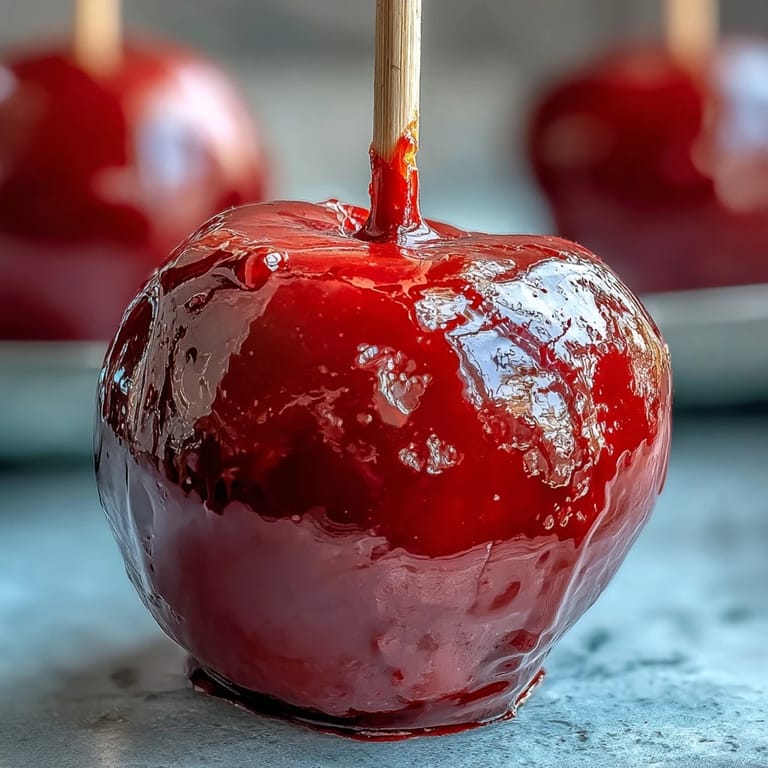
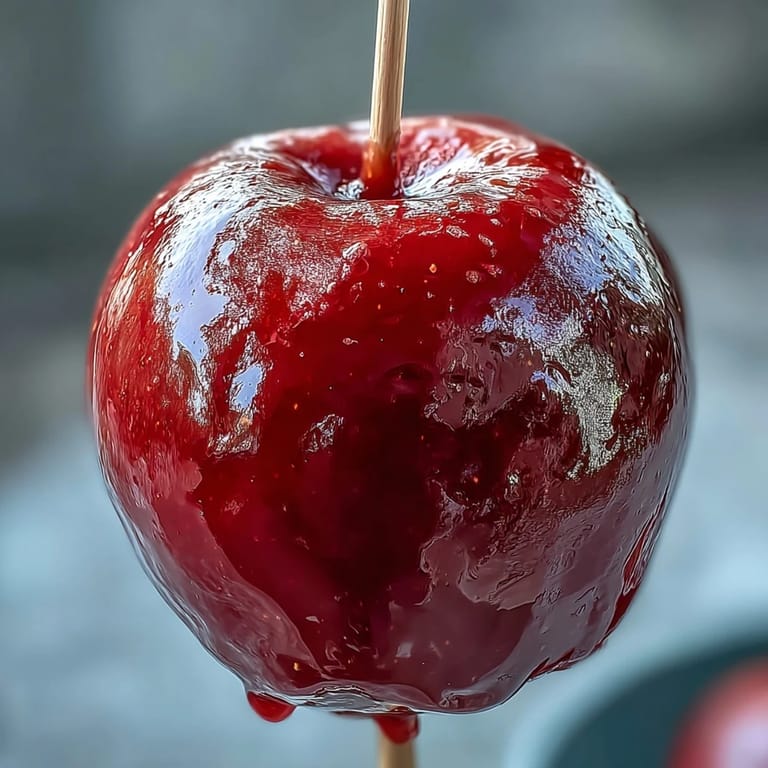
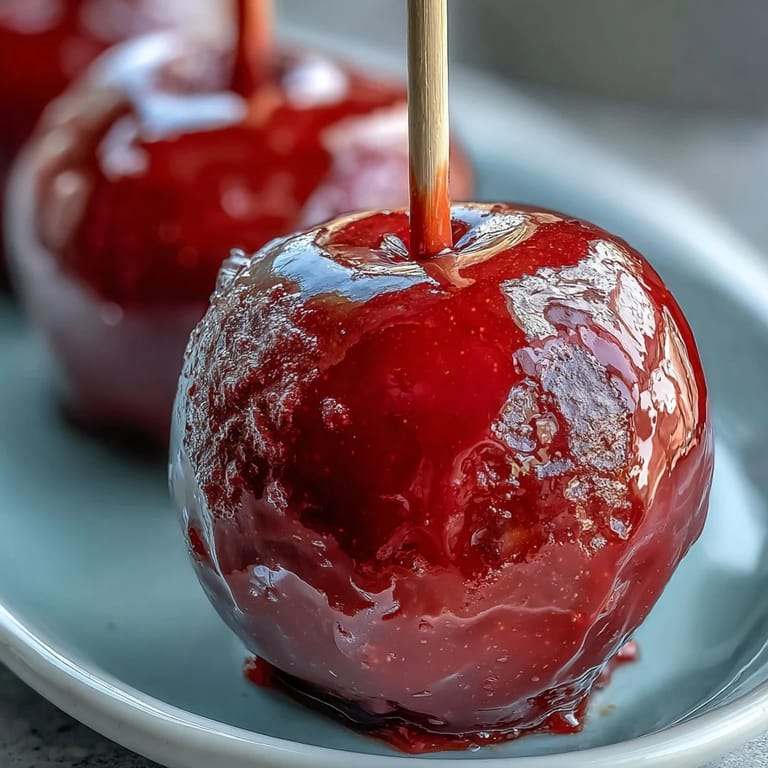
- Tilt the saucepan and dip each apple, turning it slowly to coat every surface evenly in that glossy red candy. Let the excess drip off for just a few seconds, then place it on your prepared sheet—speed matters because the candy firms up fast.
- The Hardening Moment:
- Let them sit at room temperature for about 15 minutes until the candy shell goes completely hard and shiny. This is when you'll hear that satisfying snap if you gently tap one.
 Pin it
 One autumn evening my son asked if we could make candy apples together, and I was skeptical about letting a nine-year-old anywhere near boiling sugar. But something shifted when he carefully dipped his apple and pulled it out with such concentration, his tongue poking out just slightly. He made the most lopsided candy apple you've ever seen, with drips running down one side, but when he bit into it moments later, he grinned like he'd invented it himself. That's when I realized these aren't just about the perfect candy shell—they're about the hands-on magic of making something sweet together.
Why Temperature Matters So Much
The difference between 290°F and 310°F is the difference between a gooey mess and a candy shell that stays crisp for hours. When you hit 300°F and that hard crack stage, the sugar molecules have aligned into that glassy, snappy structure that defines a perfect candy apple. I learned this the hard way when I rushed a batch and ended up with apples that felt sticky to the touch even after cooling—temperature precision is your insurance policy here.
Customization Ideas That Actually Work
The classic red is iconic, but I've had wild success with variations that feel fresh without complicating things. A friend dipped hers in green and rolled them in crushed candy canes the week before Christmas, and they looked like edible ornaments. Another time I added a drop of vanilla extract to the syrup, and somehow that tiny addition made the whole thing feel more sophisticated without changing the texture at all.
Storage and Serving Tips
These are best enjoyed within a few hours of making them while the candy shell maintains its snap and crunch. If you must store them, keep them in a cool, dry spot and wrap each one loosely in parchment—stacking them directly together will make the shells stick together. One more thing: serve them soon after cooling, because even in ideal conditions, the moisture from the apple begins to soften that shell after a while.
- Eat them fresh whenever possible—the contrast between that hard candy and crisp apple is the whole point.
- If you're making these for a party, prep them an hour before serving so guests get that perfect texture.
- Store in an airtight container in a cool spot if you absolutely must keep them longer, but they won't be quite as magical.
 Pin it
 There's something timeless about a candy apple that transcends age or occasion—it's pure nostalgia and pure joy at the same time. Make these once and you'll understand why people keep coming back to them year after year.
Recipe FAQs
- → What type of apples work best for this treat?
Firm apples like Granny Smith or Gala are ideal, as they hold up well and balance sweetness with tartness.
- → How do I know when the candy coating is ready?
The syrup should reach the hard crack stage, about 300°F (149°C), to ensure a crisp shell.
- → Can I add toppings to the coating?
Yes, rolling the coated apples in nuts or sprinkles before the coating hardens adds extra texture and flavor.
- → What safety measures should I take when working with hot syrup?
Be cautious while handling hot syrup to avoid burns, and use tools like a candy thermometer for accuracy.
- → How long should I let the coated apples cool?
Allow the apples to cool at room temperature for about 15 minutes until the candy shell hardens completely.