 Pin it
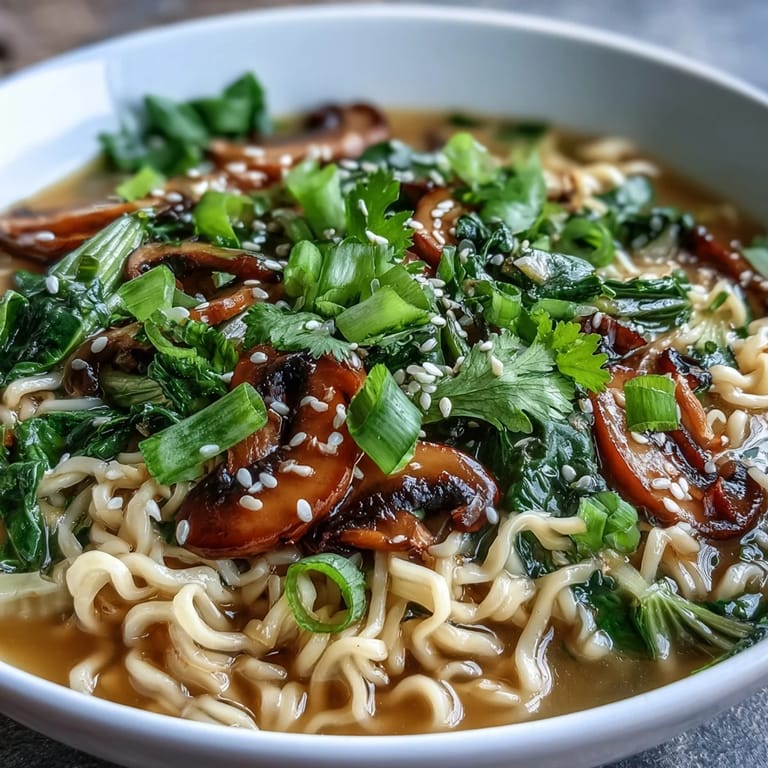
 One rainy Tuesday, I stood in my kitchen with half a can of coconut milk, a jar of red curry paste, and absolutely no plan. My roommate had gone vegan, my pantry was sparse, and I had maybe thirty minutes before we both needed to eat something. I grabbed what I could find—mushrooms from the crisper drawer, some bok choy that was still holding on—and started building flavor layers in a pot. That bowl of ramen that emerged was so unexpectedly vibrant and creamy that she asked for the recipe before she'd even finished eating.
I made this for friends during a dinner party last winter, and what struck me most was watching people slow down with their bowls. No one was rushing. They were breathing in the steam, squeezing lime over the top, asking questions about the spices. One guest said it tasted like vacation, which made me laugh because I'd made it in a completely ordinary kitchen on an ordinary night.
Ingredients
- Coconut oil: This is your fat base and it has a higher smoke point than olive oil, so it won't burn when you're building your aromatics.
- Yellow onion: The foundation of your flavor—chopping it finely helps it dissolve almost completely into the broth.
- Garlic and fresh ginger: These two are non-negotiable; they're what make the broth smell like a real restaurant kitchen.
- Red curry paste: This carries all the complexity you need, but make sure the label says vegan because some brands use fish sauce or shrimp paste.
- Ground turmeric: It adds warmth and earthiness, plus it's doing something beautiful under the surface for your immune system.
- Vegetable broth: Use one you actually like drinking because it's the backbone of everything; homemade is ideal but quality store-bought absolutely works.
- Full-fat coconut milk: The richness matters here—light coconut milk will leave you wanting, and the fat carries the flavor compounds.
- Soy sauce or tamari: This is your umami anchor; it deepens everything and makes the broth taste more savory and complete.
- Maple syrup: A small touch of sweetness balances the curry heat and prevents the broth from tasting one-dimensional.
- Sesame oil: Add this at the end; it's like a whisper of nuttiness that ties the whole bowl together.
- Mushrooms: Cremini or shiitake both work beautifully; they add substance and their own umami so the broth becomes more complex.
- Bok choy: Its mild sweetness and quick-cooking nature mean it stays bright green and doesn't disappear into the broth.
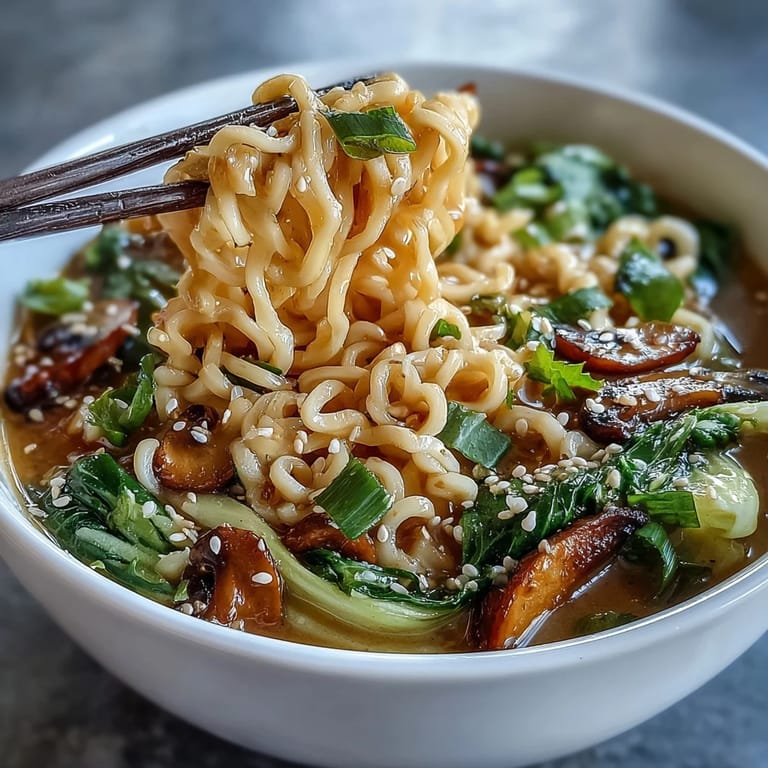
- Ramen noodles: Fresh ramen has better texture but dried works just fine; always check the package for vegan status.
- Carrot: The slight sweetness and color make the bowl more visually interesting and give you another texture layer.
- Scallions, sesame seeds, and fresh cilantro: These are your brightness tools; don't skip them because they finish the dish and make each spoonful feel intentional.
Tired of Takeout? 🥡
Get 10 meals you can make faster than delivery arrives. Seriously.
One email. No spam. Unsubscribe anytime.
Instructions
- Build your aromatic base:
- Heat the coconut oil in a large pot over medium heat, then add your chopped onion. You'll know it's ready when it stops being sharp and raw-smelling, becoming soft and almost translucent at the edges—that's your signal to add garlic and ginger. Let those sit for just a minute; you want to smell that aromatic punch but not burn anything.
- Toast the spices:
- Stir in the red curry paste and ground turmeric, letting them sit in the hot oil for about a minute. This step wakes up the spices and makes them taste deeper and more complex rather than raw and flat.
- Create the broth base:
- Pour in your vegetable broth and coconut milk slowly, stirring as you go so everything blends smoothly and there are no clumps of curry paste floating around. Add the soy sauce, maple syrup, and sesame oil, then bring everything to a gentle simmer—not a rolling boil, just a quiet bubbling at the edges.
- Cook the mushrooms:
- Add your sliced mushrooms to the simmering broth and let them sit for about eight to ten minutes. They'll start out firm and gradually become tender while releasing their own flavors into the liquid.
- Cook the noodles separately:
- While the mushrooms are doing their thing, follow the package instructions for your ramen noodles in a separate pot of boiling water. Drain them well when they're done so they don't dilute the broth when you add them to the bowls.
- Add the quick-cooking vegetables:
- Stir the bok choy and julienned carrot into the simmering broth and cook for just two to three minutes. You want the bok choy to be wilted and tender but still bright green and slightly crisp in the stems.
- Taste and adjust:
- Add salt and black pepper until the broth tastes the way you want it to. This is your moment to make it your own—more spicy, more salty, more sweet, whatever feels right.
- Assemble the bowls:
- Divide the cooked noodles among four bowls, then ladle the hot broth and all its vegetables over the top. The hot liquid will continue to gently warm everything as you serve.
- Finish and serve:
- Top each bowl with scallions, sesame seeds, fresh cilantro, and a slice of red chili if you want heat. Squeeze fresh lime over everything and serve immediately while everything is still steaming.
 Pin it
 This dish became something I made almost weekly during a particularly difficult year, not because it's complicated, but because it felt like evidence that I could still create something nourishing and beautiful on an ordinary night. There's something grounding about watching a humble pot of vegetables and broth transform into a bowl that tastes like comfort.
Finding Your Flavor Balance
The sweet, spicy, salty, and savory elements in this broth work together like a conversation. The maple syrup isn't meant to make it taste sweet—it's there to soften the sharp edges of the curry paste and keep everything in proportion. I learned this by accident when I forgot the maple syrup the first time and wondered why the broth tasted aggressive instead of welcoming. Now I always taste it as I'm going and think about what's missing: if it feels too intense, add a touch more sweetness; if it feels flat, add more salt or a splash more soy sauce.
Making It Your Own
Once you understand the basic structure of this bowl, you can improvise with almost everything else. I've made it with spinach instead of bok choy, added cubed tofu for extra protein, substituted sriracha for some of the curry paste when I wanted it hotter. A friend added peanut butter to her batch and suddenly it became something entirely new. The foundation is strong enough to hold whatever you add to it.
Timing and Technique Tips
This whole recipe hinges on not rushing. The simmering is gentle, the vegetables go in at different times so everything finishes at the same moment, and nothing gets overcooked. When you're browning your aromatics at the beginning, you're not looking for color—you're looking for softness and fragrance. When the vegetables are cooking in the broth, keep the heat at a gentle simmer so the bok choy doesn't get beaten into submission and the mushrooms have time to become truly tender and give everything up to the liquid.
- Mise en place is your friend here—have everything chopped and ready before you turn on the heat so you're not scrambling mid-broth.
- Taste the broth before you add the noodles to the bowls; seasoning it then means you're seasoning the finished dish instead of chasing balance later.
- If you're making this for guests, you can prepare the broth and vegetables ahead of time and just reheat gently while the noodles cook.
 Pin it
 This is the kind of dish that makes you feel taken care of while also reminding you that you have the skill to take care of yourself. Every bowl is a little different depending on how much broth you use and which toppings you reach for, which means you'll never get tired of it.
Recipe FAQs
- → What type of mushrooms work best in this dish?
Cremini or shiitake mushrooms add a rich umami flavor and a tender texture that's ideal for absorbing the coconut curry broth.
- → Can I substitute the noodles with gluten-free options?
Yes, gluten-free ramen noodles or alternative noodles like rice noodles work well to accommodate dietary needs.
- → How can I adjust the spice level?
Modify the amount of red curry paste and add sliced red chili according to your preferred heat tolerance.
- → Is it possible to add extra protein to the dish?
Adding cubed tofu or edamame boosts protein while maintaining the dish’s plant-based nature.
- → What can be used instead of baby bok choy?
Spinach or kale can be substituted to provide leafy greens with a similar texture and flavor profile.
- → How do you achieve the creamy texture in the broth?
The full-fat coconut milk combined with coconut oil gives the broth a rich, creamy mouthfeel without dairy.