 Pin it
 My grandmother's kitchen always smelled like caramelized onions and chicken skin crisping in cast iron, and watching her make smothered chicken taught me that Southern comfort food isn't about fancy techniques—it's about patience and knowing when to let flavors build on each other. The first time I tried making it myself, I rushed the onions, thinking golden meant done, but she caught me and made me start over, letting them cook until they were deeply caramelized and sweet. That gravy, silky and rich from the browned bits stuck to the pan, became my measuring stick for what real homestyle cooking tastes like. Now whenever I make this dish, I'm back in that kitchen, learning that the best meals come from slowing down.
I made this for my best friend on a rainy Sunday when she needed comfort more than conversation, and watching her face when she tasted it—that quiet smile before she took another bite—reminded me why this dish matters. There's something about smothered chicken that says I'm taking care of you without making a big deal out of it, and that's exactly what we both needed that afternoon.
Ingredients
- Bone-in, skin-on chicken thighs and drumsticks (8 pieces total): These cuts stay juicy through the long simmer while the skin crisps beautifully in the initial fry—avoid boneless chicken if you can because the bones add depth to your gravy.
- All-purpose flour (1 cup, plus 3 tablespoons reserved): The flour creates a light crust on the chicken and thickens your gravy with those browned bits from the pan, so don't skip reserving some.
- Vegetable oil (1/3 cup): Use an oil with a high smoke point so it gets properly hot without burning and gives you that golden-brown sear.
- Large yellow onions, thinly sliced (2 onions): Yellow onions turn sweet and mellow when caramelized, becoming the soul of your gravy—white onions are too sharp, so stick with yellow.
- Low-sodium chicken broth (2 cups): Homemade stock makes a noticeably richer gravy, but good quality store-bought works fine; avoid high-sodium broth or your seasoning will be off.
- Salt, black pepper, paprika, garlic powder, onion powder, dried thyme, and unsalted butter: These seasonings build layers of flavor—the paprika adds warmth, the thyme adds earthiness, and the butter at the end makes everything silky.
Tired of Takeout? 🥡
Get 10 meals you can make faster than delivery arrives. Seriously.
One email. No spam. Unsubscribe anytime.
Instructions
- Pat and season your chicken:
- Use paper towels to dry each piece thoroughly—this helps the skin crisp instead of steam. Dust all sides generously with salt, pepper, paprika, garlic powder, and onion powder, getting into every crevice so the flavor sinks in while the chicken sits.
- Dredge in flour:
- Mix flour, salt, and pepper in a shallow bowl, then coat each piece completely, shaking off the excess—you want a thin, even layer, not a thick crust. Set the remaining flour aside for your gravy.
- Fry the chicken until golden:
- Heat oil in a large heavy skillet over medium heat until it shimmers slightly, then carefully place chicken skin-side down and listen for that satisfying sizzle. Fry for 6 to 8 minutes per side without moving it around too much—you're building that golden crust, not steaming it, so resist the urge to flip constantly.
- Build your onion base:
- Pour off all but 2 tablespoons of oil, then add sliced onions to the hot pan and let them sit undisturbed for a minute before stirring—this caramelizes them instead of just softening them. Stir frequently over medium heat for 8 to 10 minutes until they're deep golden and smell like pure comfort, then sprinkle your reserved flour over them and cook for another minute, stirring, until the flour turns light brown.
- Create the gravy:
- Slowly whisk in chicken broth while scraping the bottom of the pan with your whisk—all those browned bits are flavor gold and they'll dissolve into your gravy. Add thyme, paprika, salt, pepper, and butter, then simmer for 2 to 3 minutes until the gravy coats the back of a spoon.
- Braise low and slow:
- Nestle your chicken back into the skillet, spoon some gravy over it, then cover and turn heat to low—this is where the chicken becomes fork-tender and the flavors marry together. Simmer for 25 to 30 minutes until the internal temperature hits 165°F, checking occasionally so the sauce doesn't reduce too much.
- Serve with generosity:
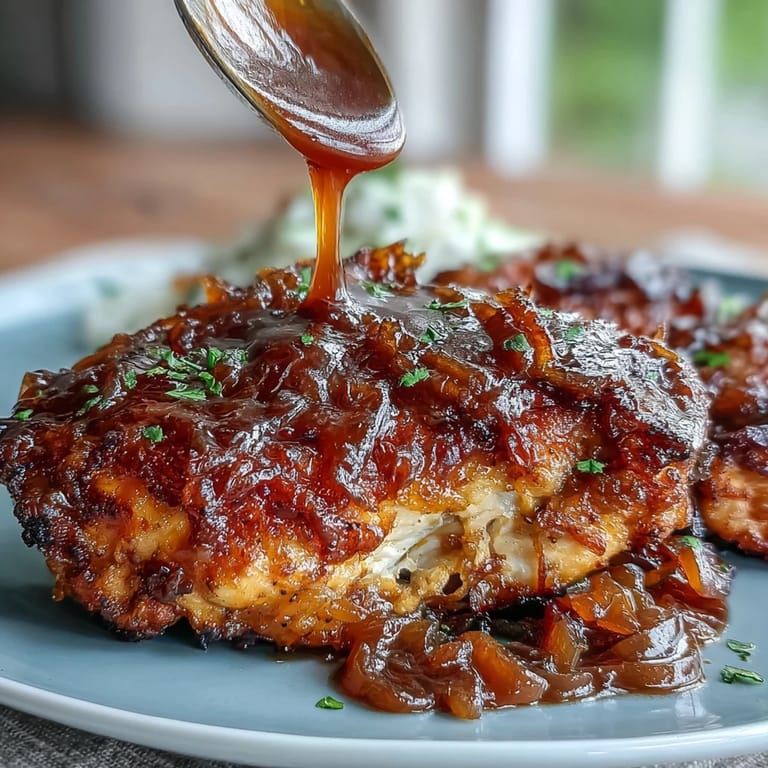
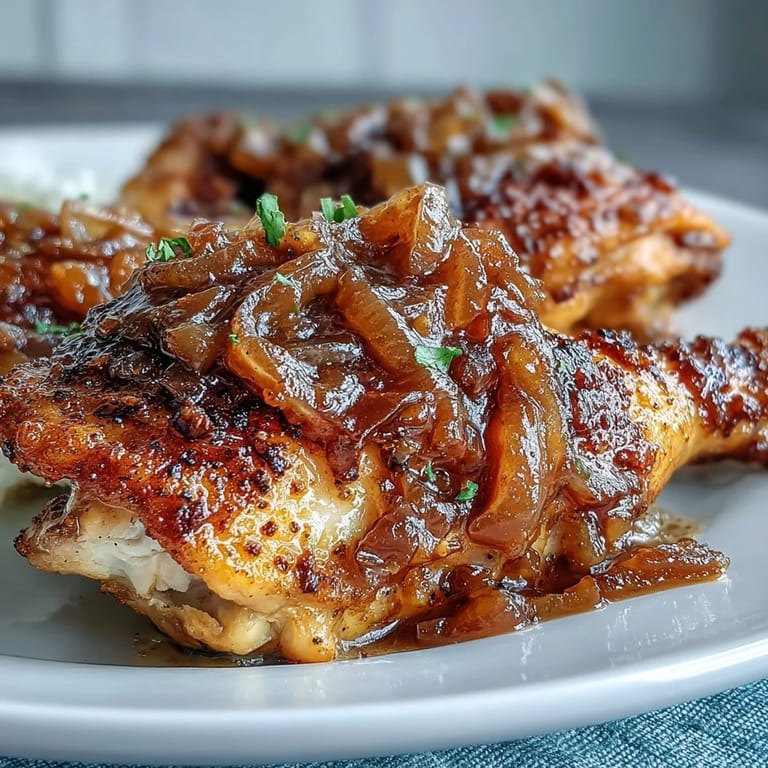
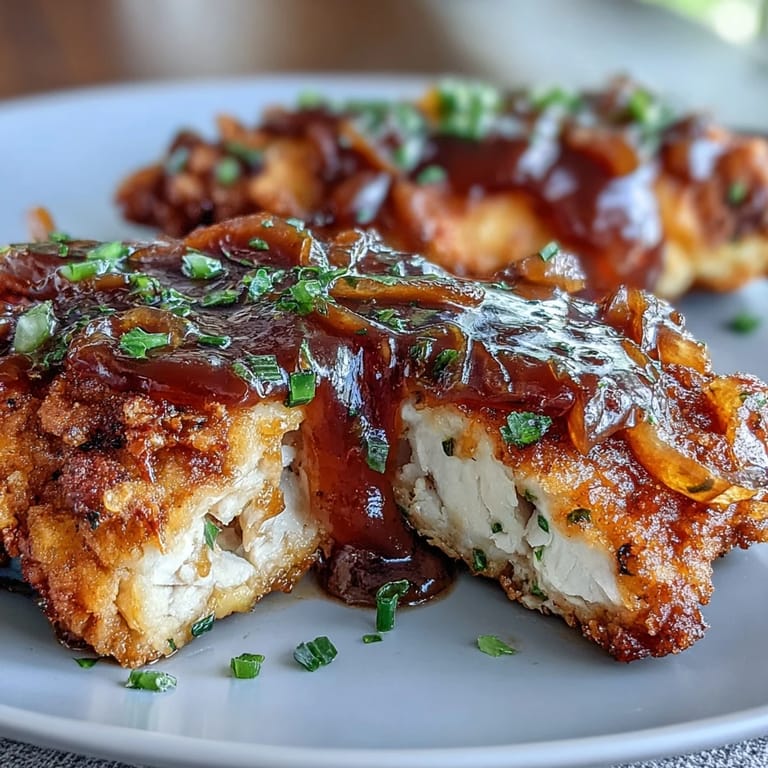
- Transfer chicken to a platter and spoon that rich onion gravy generously over everything—this is not a dish for small portions.
 Pin it
 There was a moment during a family dinner when my uncle, who usually rushes through meals, slowed down and actually sat at the table with a second plate of this chicken, and my mom caught my eye across the table with this knowing smile. That's when I understood that smothered chicken isn't just food—it's a conversation starter that says you belong here.
Why Bone-in Chicken Matters
The bones and skin do two important things here: they keep the meat incredibly moist during the long simmer because they're insulating it, and they season your gravy from the inside out with their natural gelatin and flavor. I learned this the hard way when I once tried boneless chicken to save time, and the gravy tasted thin and one-note compared to my usual batch—now I always buy bone-in pieces even if I have to special-order them.
The Magic of Caramelized Onions in Your Gravy
Caramelization is just patience and heat working together to break down the onion's natural sugars into something sweet and deeply savory, which is why rushing this step changes everything about the final dish. When onions caramelize properly, they become almost velvety, and when they mix with that savory stock, you get a gravy that tastes homemade in the best possible way.
Serving Suggestions and Storage
This dish sings with mashed potatoes or rice, and if you're feeling Southern, collard greens on the side complete the picture—though honestly, you could eat this gravy with a spoon and be perfectly happy. Leftover smothered chicken keeps beautifully in the fridge for three days and actually tastes better the next day once the flavors have settled, plus it reheats gently without drying out.
- Serve over creamy mashed potatoes, fluffy rice, or warm biscuits to catch every drop of gravy.
- Reheat gently on the stovetop over low heat with a splash of broth to restore the silky texture of the gravy.
- Make it ahead and refrigerate for up to three days—the flavors deepen overnight.
 Pin it
 This is the kind of dish that fills your kitchen with warmth and your table with people who linger a little longer, and that's exactly what good food should do. Make it for someone you love.
Recipe FAQs
- → What type of chicken is best for this dish?
Bone-in, skin-on chicken thighs and drumsticks deliver the best flavor and moisture for smothered dishes.
- → How is the onion gravy thickened?
The gravy is thickened by cooking flour with sautéed onions before gradually whisking in chicken broth.
- → Can the cooking time be adjusted for boneless chicken?
Yes, using boneless, skinless chicken reduces simmering time by about 10 minutes, ensuring it remains tender.
- → What sides complement this dish well?
Mashed potatoes, rice, or collard greens are classic sides that pair perfectly, balancing the rich flavors.
- → Is it necessary to fry the chicken before simmering?
Pan-frying creates a golden crust and adds flavor before simmering the chicken in the onion gravy for tenderness.