 Pin it
 One afternoon, my neighbor brought over a bento box from a tiny Japanese market downtown, and inside was the simplest bowl of seasoned rice topped with nori strips and cucumber that somehow tasted like an entire story. I spent the next week trying to recreate it in my own kitchen, learning that the magic wasn't in complicated technique but in respecting each ingredient's quiet purpose. This seaweed and nori rice bowl became my go-to answer when I want something that feels both nourishing and alive on the plate.
I made this for my daughter on a quiet Tuesday when she'd had a rough day at school, and watching her eat slowly, deliberately, seeming to find some kind of peace in the ritual of it, reminded me why I cook at all. She asked for seconds without even looking up, and that moment told me everything I needed to know about whether this recipe deserved a permanent spot in our rotation.
Ingredients
- Sushi rice: The short-grain variety matters here because it has just enough starch to hold together without becoming gummy, and its slight sweetness becomes the foundation for everything else on top.
- Water: Measure this carefully, as the rice-to-water ratio determines whether you end up with fluffy grains or a starchy paste.
- Rice vinegar: This brightens the rice without overwhelming it, creating that signature gentle tang that makes the whole bowl feel balanced.
- Sugar and salt: These dissolve into the vinegar and coat each grain, building flavor from the bottom up rather than sitting on top as an afterthought.
- Nori sheets: High-quality nori has a clean ocean taste, so don't skimp here, and cutting it into strips by hand lets you control the size to match your mood.
- Wakame seaweed: Rehydrating it properly is the difference between tender, delicate strands and chewy disappointment, so follow the package timing exactly.
- Cucumber: Slice it thin enough that it curls slightly when you layer it, which adds both visual interest and a refreshing crunch.
- Scallions: The white parts add a gentle bite while the greens bring color and a hint of onion perfume that lingers pleasantly.
- Toasted sesame seeds: Toast them yourself in a dry pan if you can, as the aroma is half the reason this dish feels special.
- Pickled ginger and soy sauce: These are your final-moment flavor adjusters, letting each person customize their own bowl to taste.
Tired of Takeout? 🥡
Get 10 meals you can make faster than delivery arrives. Seriously.
One email. No spam. Unsubscribe anytime.
Instructions
- Rinse and cook your rice:
- Cold water over the rice, swirling gently until the water runs clear, removes excess starch that would otherwise make the grains stick together in an unpleasant way. Combine with fresh water and bring to a boil, then cover and lower the heat to barely a whisper, letting it sit undisturbed for 15 minutes until all the water vanishes into the grains.
- Season while warm:
- Microwave the vinegar, sugar, and salt together just long enough to dissolve everything into a clear liquid, then fold it gently through the warm rice so the grains stay whole and separate. This is not the time to stir aggressively, as warm rice is delicate and will break under rough handling.
- Prepare your seaweed:
- Follow the wakame package instructions exactly, usually a few minutes in cool water, then drain and gently squeeze out excess moisture so it doesn't water down your finished bowl. Use scissors or a sharp knife to cut the nori sheets into ribbons that feel substantial enough to bite through but not so thick they overpower.
- Build your bowls:
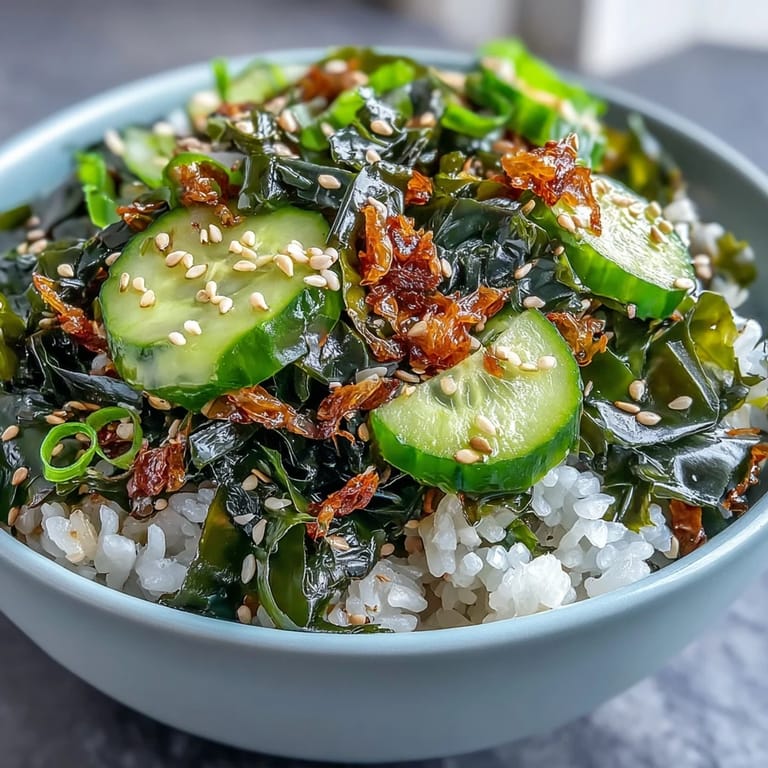
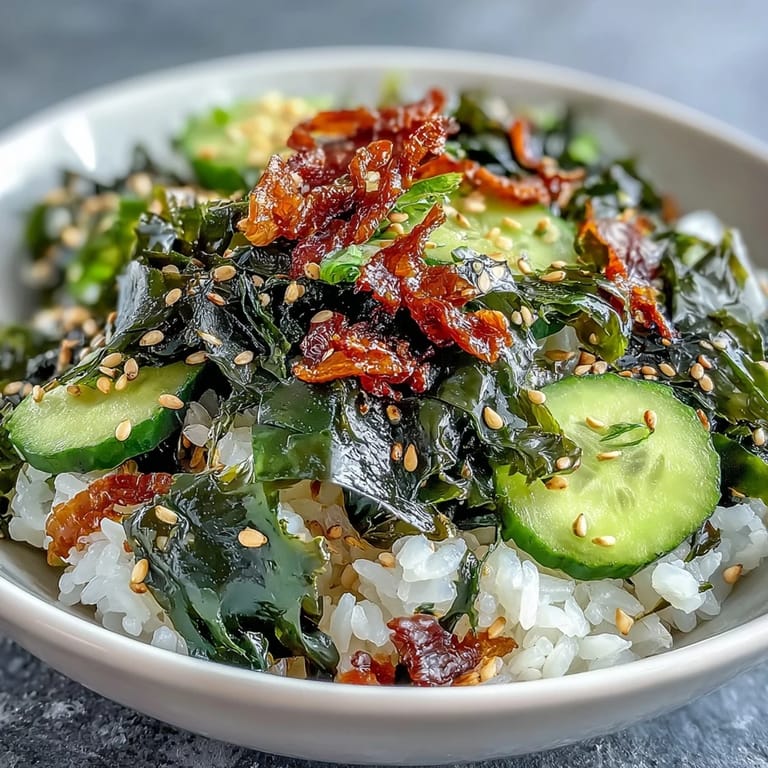
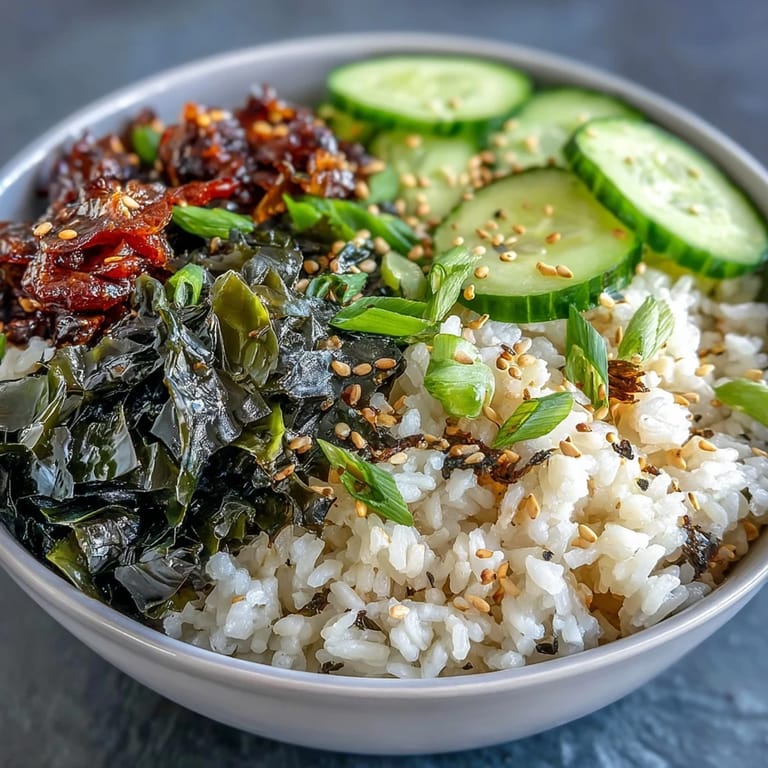
- Start with a generous scoop of the seasoned rice, creating a slight well in the center, then layer your wakame, nori strips, cucumber slices, and scallions in whatever pattern appeals to you. This is your chance to make it beautiful, as eating with your eyes first changes the entire experience.
- Finish and serve:
- Sprinkle sesame seeds over everything, add a small mound of pickled ginger to the side if using, and set the soy sauce bottle nearby so people can adjust the saltiness to their preference. Serve immediately while the rice is still warm and the cucumber maintains its crispness.
 Pin it
 There's a moment when you bring a warm bowl to the table and everyone goes quiet for a second, examining what you've made before diving in, and that pause is when you know a dish has truly succeeded. This bowl creates that moment every single time, and it's become the recipe I make when I want to remind myself that simple food, made with intention, is the most nourishing kind.
The Story Behind Seaweed in Japanese Cuisine
Seaweed isn't just an ingredient in Japanese cooking, it's a philosophy about respecting the ocean and using what it offers with gratitude. When you eat this bowl, you're connecting to centuries of kitchen wisdom that understood seaweed as both a flavor builder and a nutritional powerhouse long before the rest of the world caught on. Learning to appreciate the subtle differences between nori and wakame, understanding how their flavors complement rice and vegetables, taught me to approach cooking with more curiosity and less assumption.
Customizing Your Bowl
The beauty of this recipe is that it's genuinely flexible without losing its character. I've added soft-boiled eggs on mornings when I wanted extra protein, scattered shredded carrots when I needed more color, and tossed in edamame when I was feeding hungrier guests. The core of seasoned rice and nori stays constant, but everything around it can shift based on what's in your refrigerator or what your body is craving that particular day.
Mastering the Rice Seasoning
The seasoning mixture is where this bowl transforms from plain rice into something that tastes intentional and balanced. I learned that dissolving the sugar and salt in the vinegar first, before it touches the rice, ensures even distribution rather than pockets of overly salty or sweet grains that throw off the whole experience. The warmth of the rice means it absorbs the seasoning more readily, so timing this step right after the rice finishes cooking is non-negotiable for the best result.
- If your rice vinegar smells particularly sharp, you can reduce the amount slightly and add a touch of mirin for more rounded sweetness.
- Taste a grain of seasoned rice before serving, as different rice brands absorb liquid differently and you might need to adjust your seasoning proportions.
- Never season cold rice, as the grains won't absorb the flavors and you'll end up with seasoning sitting on top rather than incorporated throughout.
 Pin it
 This bowl has become my answer to the question of what to cook when I want something that feels both comforting and alive, nourishing and light. Make it once and it'll likely become a regular visitor to your table too.
Recipe FAQs
- → How do I prepare the sushi rice for this dish?
Rinse sushi rice under cold water until clear, cook with measured water until absorbed, and then fold in a mixture of rice vinegar, sugar, and salt for subtle seasoning.
- → Can I use other types of seaweed besides nori and wakame?
Yes, feel free to experiment with other edible seaweeds like dulse or kombu to add unique textures and flavors.
- → What garnishes complement the flavors in this bowl?
Toasted sesame seeds add nuttiness, while pickled ginger and furikake provide extra umami and brightness.
- → Is there a way to boost the protein content in this meal?
Adding marinated tofu or a soft-boiled egg offers extra protein and enriches the dish's texture.
- → How should the seaweed be prepared before assembling the bowl?
Rehydrate dried wakame according to package instructions and chop nori sheets into thin strips for an even distribution of flavor.