 Pin it
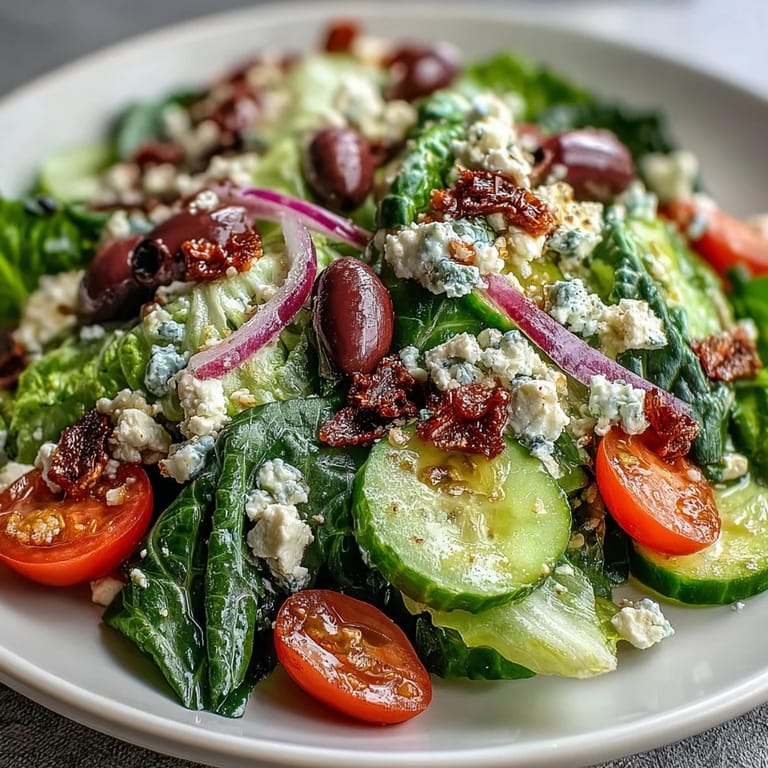
 There's a particular moment in summer when a proper Greek salad stops being just vegetables on a plate and becomes something that tastes like the Mediterranean sun itself. I discovered this one afternoon while standing in my kitchen with the windows thrown open, realizing that sometimes the best meals are the ones that require nothing more than good ingredients and honest assembly. No cooking, no fussing, just the kind of food that makes you grateful for fresh produce and crisp lettuce that actually tastes like something.
I made this for a dinner party last spring when everyone seemed tired of heavy foods, and I watched my guests go back for seconds without even thinking about it. There's something quietly confident about serving a salad this straightforward—it trusts that quality ingredients don't need apologies or explanations. The feta crumbles, the olives gleam, and suddenly you're not just eating lunch, you're eating something with intention.
Ingredients
- Romaine lettuce: Choose heads that feel crisp and sturdy, not limp or browning at the edges; wash and dry thoroughly so your salad doesn't get soggy.
- Cherry tomatoes: Halve them just before serving to keep their juices from breaking down the other vegetables too early.
- Cucumber: Slice into half-moons so each bite has that satisfying crunch and cool sweetness.
- Red onion: Slice thin enough that it's tender but assertive, adding a gentle bite to every forkful.
- Feta cheese: Crumble it by hand if you can; it'll have better texture and won't turn into a paste the way pre-crumbled sometimes does.
- Kalamata olives: Their briny, slightly fruity flavor is what makes this salad feel authentically Greek rather than just a random vegetable bowl.
- Extra-virgin olive oil: This is where you don't compromise; cheap oil makes a flat dressing, while good oil makes the whole thing sing.
- Red wine vinegar: It's sharp enough to balance the richness of the oil without overpowering the delicate vegetables.
- Dried oregano: Don't skip it or use fresh here; dried oregano has a more concentrated, almost peppery quality that defines the dressing.
- Garlic: Mince it fine so it distributes evenly through the vinaigrette rather than leaving chunks you'll bite into.
- Dijon mustard: A small amount acts as an emulsifier, helping the oil and vinegar stay together instead of separating.
Tired of Takeout? 🥡
Get 10 meals you can make faster than delivery arrives. Seriously.
One email. No spam. Unsubscribe anytime.
Instructions
- Prep your vegetables with intention:
- Chop your romaine into bite-sized pieces, halve the tomatoes, slice the cucumber, and thinly slice your red onion. You want everything roughly the same size so the salad feels balanced and every bite has something interesting in it.
- Build the base:
- Toss the lettuce, tomatoes, cucumber, and red onion together in your largest bowl. There should be enough room to move things around without crushing anything.
- Add the salty, briny elements:
- Scatter the crumbled feta and halved olives over the vegetables—don't mix yet, just let them sit on top where they'll add little pockets of flavor throughout.
- Make the vinaigrette from scratch:
- In a small bowl or jar, whisk together the olive oil, red wine vinegar, oregano, minced garlic, mustard, salt, and pepper until the mixture looks slightly thickened and the ingredients are evenly distributed. You'll see the emulsion coming together as you whisk.
- Dress and serve immediately:
- Drizzle the vinaigrette over the salad and toss everything gently to coat, being careful not to mash the feta or crush the vegetables. Serve right away while the lettuce is still crisp and everything tastes like it just came from the garden.
 Pin it
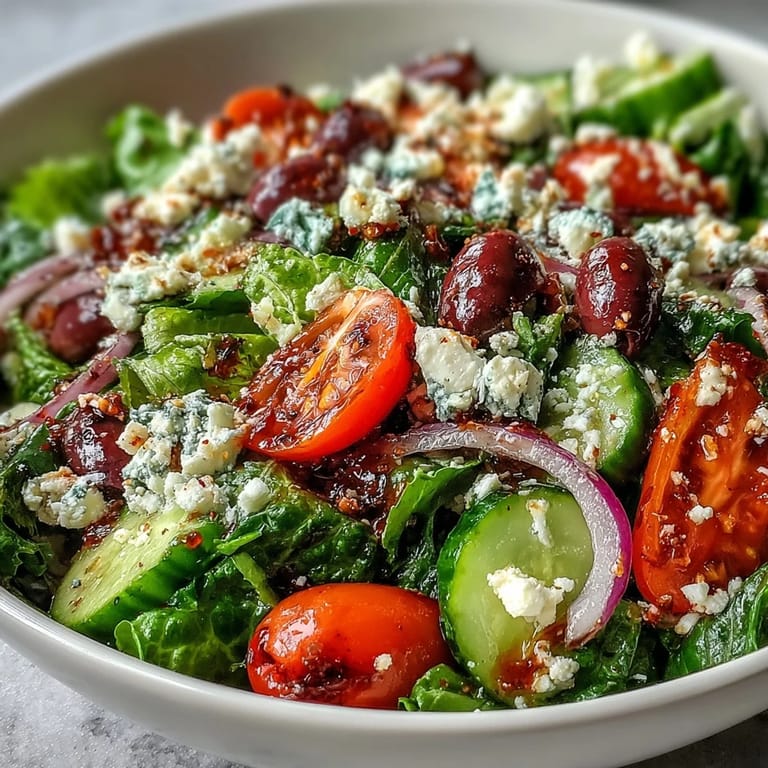
 Years ago I made this salad for a friend who was going through a difficult time, and she told me later that eating something this simple and fresh had actually helped her mood that day. It's one of those dishes that reminds you why food matters beyond just nutrition—it's about care, about honoring good ingredients, about the quiet ritual of putting a meal together with attention.
The Vinaigrette Makes Everything
Don't be tempted to use bottled dressing, no matter how convenient it seems. Homemade vinaigrette takes four minutes to make and tastes like the difference between something adequate and something you'll actually crave. The Dijon mustard is the secret weapon here—it keeps the oil and vinegar from separating and adds a subtle depth that makes people ask what you did to make it taste so good.
Building Flavors That Work Together
The beauty of a Greek salad is that every ingredient earns its place. The briny olives play against the mild, creamy feta; the sharp red onion cuts through the richness; the cool cucumber provides sweetness and crunch. This isn't random assembly—it's a conversation between flavors that have been together in Mediterranean cooking for generations. When you understand how the ingredients talk to each other, you can make small substitutions with confidence and adapt it to what you have on hand.
Variations and Additions That Still Feel True
Once you've made this salad a few times, you'll start seeing ways to make it your own. I've added sliced bell peppers for more sweetness, scattered fresh dill across the top for an herbaceous note, and even thrown in some chickpeas when I wanted something heartier. The point is that this base is solid enough to accommodate additions without losing its essential Greek-ness. It works as a side dish, a light lunch, or even as the foundation for grilled chicken or shrimp if you want to make it a full meal.
- Bell peppers add brightness and a slight sweetness that complements the tangy vinaigrette beautifully.
- Fresh dill or parsley scattered on top brings a garden-fresh quality that feels special without being complicated.
- Serve it alongside warm pita bread or grilled chicken if you want to turn it into something more substantial.
 Pin it
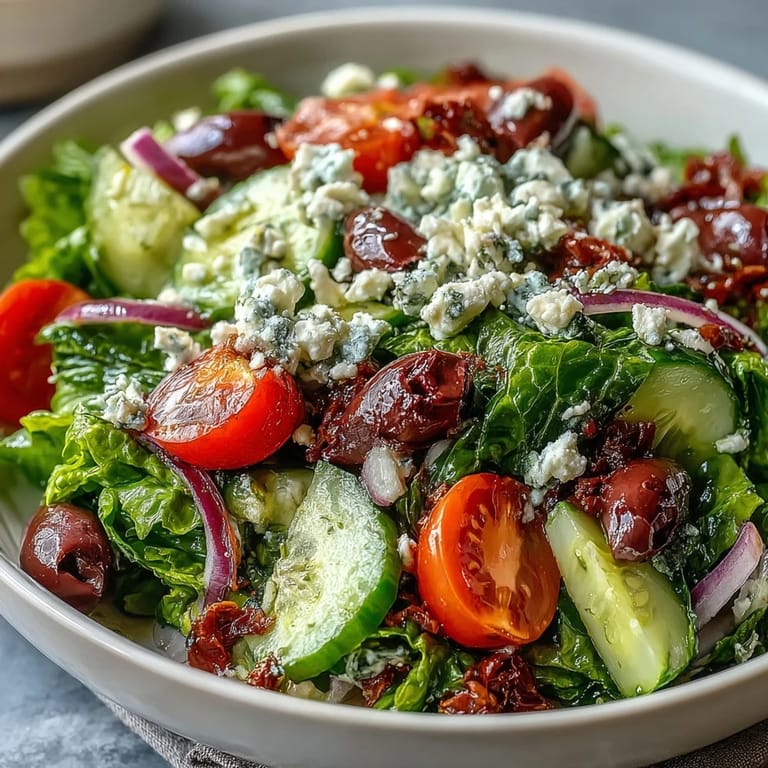
 This salad is one of those recipes that proves you don't need hours in the kitchen or a long list of unfamiliar ingredients to create something genuinely delicious. It's honest food that respects good ingredients and the people eating it.
Recipe FAQs
- → Can I make this salad ahead of time?
Yes, you can prepare the vegetables and dressing separately up to a day in advance. Keep the chopped vegetables in an airtight container and store the vinaigrette in a sealed jar. Toss everything together just before serving to maintain the crisp texture.
- → What can I substitute for feta cheese?
For a dairy-free option, use vegan feta or cubed avocado. If you eat dairy but want a different flavor profile, try crumbled goat cheese, halloumi, or fresh mozzarella. Each alternative brings a unique creaminess to the bowl.
- → How long does the vinaigrette stay fresh?
The homemade Greek dressing will keep in the refrigerator for up to one week when stored in a sealed jar. Give it a good shake or whisk before using, as the ingredients may separate slightly when chilled.
- → Can I add protein to make it more filling?
Absolutely. Grilled chicken, shrimp, or chickpeas work wonderfully. For a vegetarian protein boost, add quinoa, white beans, or a hard-boiled egg. These additions transform it into a complete meal.
- → What's the best way to slice the red onion?
Slice the onion as thinly as possible for the best texture and flavor distribution. A sharp knife or mandoline works well. If the onion taste is too strong, rinse the slices under cold water before adding to the salad.
- → How do I prevent soggy leftovers?
Store ingredients separately if you plan to enjoy leftovers. Keep the dressed portion in one container and any undressed vegetables in another. The vinaigrette can make the lettuce wilt over time, so adding it fresh keeps everything crisp.