 Pin it
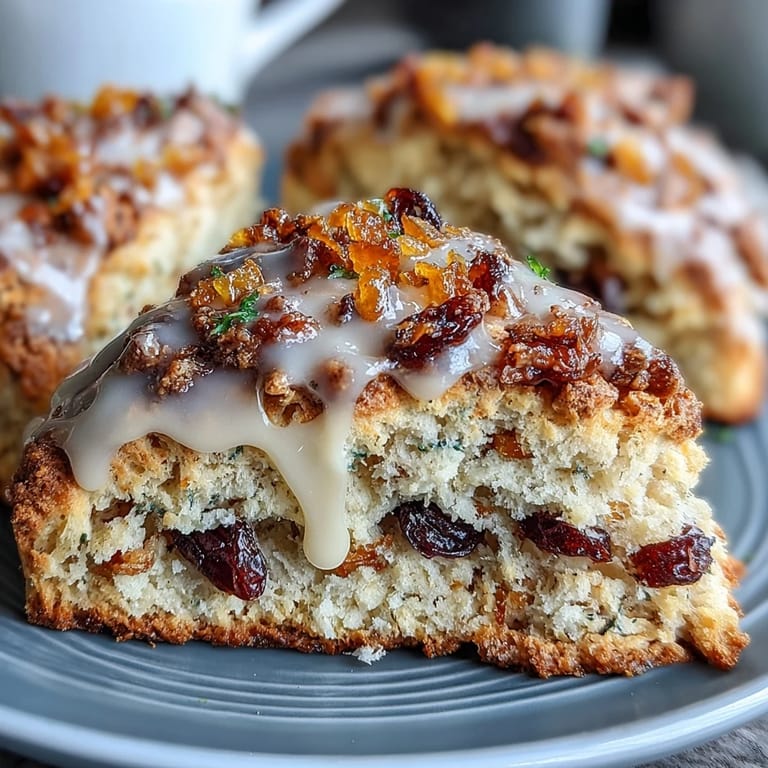
 My kitchen smelled like a candied dream last winter when I decided to bake something special for a Valentine's brunch that felt more grown-up than the usual chocolate fare. These scones emerged warm from the oven, their edges catching the light like little golden jewels, studded with jewel-toned cranberries and bright bits of candied orange that tasted like a sophisticated whisper of citrus. There's something about the combination of tender, buttery pastry meeting that tart-sweet duo that keeps people reaching for seconds. What struck me most was how simple the technique felt, yet how impressed everyone looked when they bit into that first scone. It became my go-to when I wanted to feel like I'd actually tried.
I'll never forget my neighbor popping over while these were cooling and the way her whole face lit up when she smelled them. She'd been skeptical about coming to an impromptu brunch, but one bite changed everything—suddenly we were laughing over tea and planning our next gathering. That's when I realized these weren't just scones; they were small edible moments that made people want to linger a little longer at the table.
Ingredients
- All-purpose flour (2 cups): This is your foundation—measure it by spooning and leveling, not scooping straight into the bag, or you'll end up with dense, heavy scones instead of the tender crumb you're after.
- Granulated sugar (1/4 cup): Just enough sweetness to balance the tartness of the cranberries without making these taste like dessert for breakfast.
- Baking powder (1 tablespoon): The quiet hero that gives you that characteristic light, airy texture—make sure yours is fresh, or your scones will be disappointingly flat.
- Fine sea salt (1/2 teaspoon): A small pinch that somehow makes everything taste more like itself, especially the citrus notes.
- Dried cranberries (1/2 cup): Choose ones that are still slightly plump and moist; they'll plump up even more in the oven and stay tender rather than becoming hard little bullets.
- Candied orange peel (1/3 cup, finely chopped): This is non-negotiable for the signature flavor—chop it fairly small so every bite has that sunny citrus hit without landing a huge chunk in someone's mouth.
- Orange zest (from 1 orange): Use a microplane if you have one; it captures the bright oils from the skin without the bitter white pith.
- Cold unsalted butter (1/2 cup, cubed): Cold is the magic word here—warm butter will ruin the flaky layers you're trying to build, so straight from the fridge is what you want.
- Heavy cream (2/3 cup, plus extra for brushing): This replaces the traditional milk or buttermilk and creates a richer, more tender crumb that's absolutely worth it.
- Large egg (1): Acts as a gentle binder and helps create that beautiful golden crust when brushed on top.
- Pure vanilla extract (1 teaspoon): A warmth that ties all the flavors together without being obvious.
- Powdered sugar (1/2 cup, optional for glaze): If you're going this route, sift it first to avoid lumps in your glaze.
- Fresh orange juice (1–2 tablespoons, for glaze): Keeps the glaze thin and drizzle-able while echoing the candied orange flavor throughout.
Tired of Takeout? 🥡
Get 10 meals you can make faster than delivery arrives. Seriously.
One email. No spam. Unsubscribe anytime.
Instructions
- Heat your oven and prepare:
- Set your oven to 400°F and line a baking sheet with parchment paper—this step matters because it prevents sticking and gives your scones even heat from below. Do this first so you're not scrambling when the dough is ready.
- Mix your dry ingredients:
- In a large bowl, whisk together flour, sugar, baking powder, and salt until everything is evenly distributed. This creates a uniform base and begins incorporating air into your mixture.
- Cut in the cold butter:
- Add your cold butter cubes and use a pastry cutter, fork, or your fingertips to work the butter into the flour mixture until it resembles coarse breadcrumbs with some pea-sized pieces of butter still visible. These little butter pieces are what create those beautiful flaky layers.
- Fold in the fruit and zest:
- Gently stir in the cranberries, candied orange peel, and orange zest until they're distributed throughout. This is where your scones start to get personality.
- Bring the dough together:
- Whisk together the heavy cream, egg, and vanilla in a separate bowl, then pour this over your dry mixture. Stir gently with a fork just until the dough comes together—if you overwork this, you'll develop gluten and end up with tough scones instead of tender ones. A few small flour streaks are totally fine.
- Shape your scones:
- Turn the dough onto a lightly floured surface and gently pat it into a disc about 1 inch thick. Use a sharp knife to cut it like a pizza into 8 equal wedges, working cleanly without sawing motions.
- Set up for baking:
- Arrange your wedges on the prepared baking sheet with a little space between each one—they'll puff up as they bake. Brush the tops generously with extra heavy cream for that beautiful golden finish.
- Bake until golden:
- Bake for 16 to 18 minutes until the tops are deep golden brown and a toothpick inserted into a scone comes out with just a few moist crumbs. Your kitchen will smell absolutely incredible during this time.
- Cool and glaze:
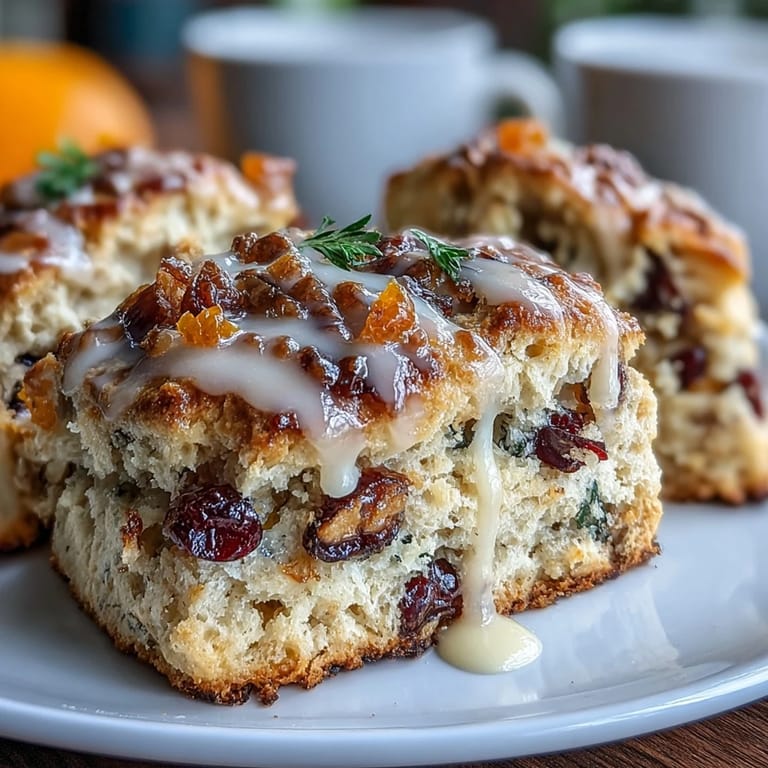
- Let the scones cool on a rack for a few minutes while you whisk together powdered sugar and fresh orange juice until smooth. Drizzle the glaze over cooled scones if desired, letting it pool slightly on top before it sets.
 Pin it
 There was a morning when my teenage daughter, who usually sleeps until noon, appeared in the kitchen drawn by the smell alone. We ended up sitting together with these warm scones, cream, jam, and tea, and she actually talked to me about her day without me having to ask a dozen questions. Sometimes the best part of cooking isn't the recipe itself—it's the conversation that happens around it.
The Science of Tender Scones
What makes a scone tender versus tough comes down to how gently you treat the dough once the wet ingredients hit the dry ones. Every extra stir develops gluten strands, and while gluten is great for chewy bread, it's the enemy of tender scones. The goal is just enough mixing to bring things together, then you stop—it feels unfinished, but that's exactly the point. I learned this after making dense, compact scones for years, thinking I needed to really work the dough to make it come together properly.
Why Candied Orange and Cranberries Work Together
On their own, tart cranberries can feel a bit one-note, and candied orange can be overly sweet, but together they create this sophisticated balance that feels intentional and thoughtful. The tartness of the cranberries reins in the sweetness of the candied peel, while the citrus brightness cuts through the richness of the butter and cream. It's the kind of flavor combination that makes you lean back after the first bite and actually think about what you're tasting.
Making These Scones Your Own
The beautiful thing about this base recipe is how flexible it is once you understand the technique. I've experimented with everything from dried cherries to pistachios, white chocolate dips to a simple cinnamon-sugar topping, and they've all worked because the foundation is solid. The key is respecting the ratio of dry to wet ingredients and keeping your technique gentle—change the flavoring elements all you like. Here are some directions worth exploring:
- Try swapping the candied orange for lemon zest and dried blueberries for a brighter spring version, or use dried cherries with almond extract for something more subtle and sophisticated.
- Dip the warm tops in melted white chocolate for a special occasion touch that feels fancier than it actually is.
- These freeze beautifully for up to a month—wrap them well and reheat gently in a 300°F oven for about 5 minutes when you're ready to serve.
 Pin it
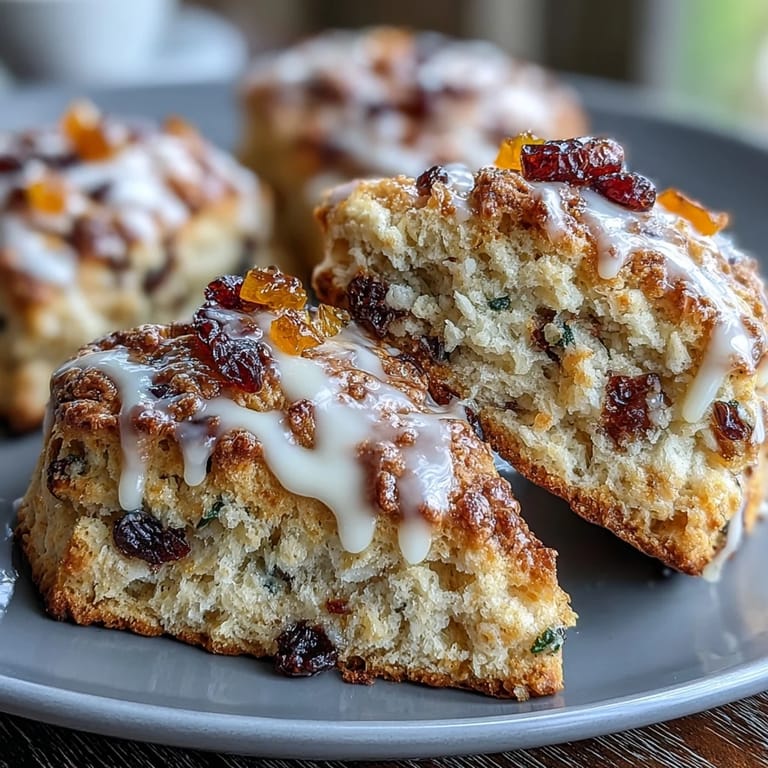
 These scones have become my answer to the question of what to bring when I want to feel thoughtful without spending all day in the kitchen. They're elegant enough for company but simple enough that I can make them on an ordinary Wednesday morning just because.
Recipe FAQs
- → What type of flour is best for tender scones?
All-purpose flour is ideal for scones, providing the right balance of structure and tenderness.
- → How can I ensure a flaky texture in scones?
Use cold unsalted butter and handle the dough gently to prevent overworking, which helps retain flakiness.
- → Can I substitute dried cherries or raisins for cranberries?
Yes, dried cherries or golden raisins can be used as alternatives, offering a different but complementary sweetness.
- → Is it necessary to glaze the scones?
Glazing with powdered sugar and orange juice is optional but adds a nice subtle sweetness and shine.
- → Can these scones be frozen and reheated?
Yes, they freeze well. Reheat briefly before serving to restore freshness.