 Pin it
 There's something about September that makes me crave soup, even when the weather hasn't quite turned cold yet. I discovered this butternut squash and apple combination on a breezy afternoon while sorting through farmer's market hauls, struck by how the golden squash and deep red apples seemed to belong together. That first batch taught me that sometimes the best dishes come from humble ingredients that whisper their own story—no fancy techniques required, just patience and a good blender.
I made this soup for my neighbor last October when she was recovering from surgery, and watching her face light up at the first spoonful reminded me why cooking for others matters so much. She asked for the recipe three times before I left, then called the next day to say she'd made it twice already. That's when I knew this wasn't just another soup—it was the kind that sticks with people.
Ingredients
- Butternut squash (1 medium, about 2 lbs): The star ingredient that brings natural creaminess when blended, no cream needed if you're careful with texture.
- Apples (2 medium, Gala or Fuji work best): Sweeter varieties prevent the soup from tasting one-note, and they soften quickly alongside the squash.
- Yellow onion (1 medium): The foundation that builds subtle depth as it caramelizes slightly in the oil.
- Garlic (2 cloves): Just enough to whisper in the background without overpowering the delicate fruit and vegetable balance.
- Vegetable broth (4 cups): Use a good quality broth if you can—it makes a noticeable difference in the final flavor.
- Apple cider or juice (1/2 cup): This deepens the apple flavor and adds a subtle tartness that keeps things interesting.
- Heavy cream or coconut milk (1/2 cup, optional): The secret to that restaurant-quality velvety texture, though the soup is gorgeous without it too.
- Cinnamon, nutmeg, ginger: These three work like a quiet harmony—use fresh spices from jars you actually use regularly, as stale ones fade into nothing.
- Salt and pepper: Always taste and adjust at the end, since broth saltiness varies wildly between brands.
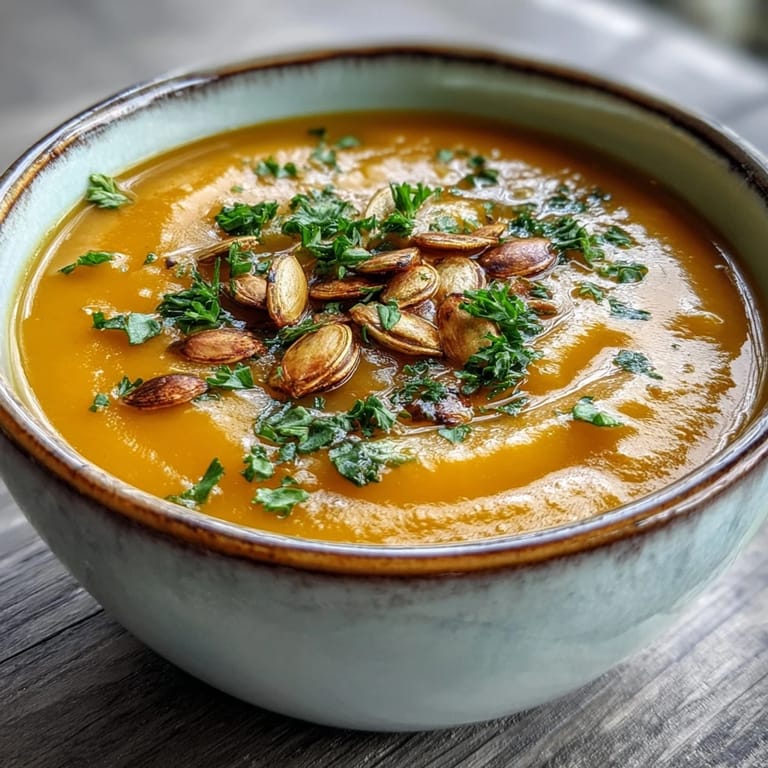
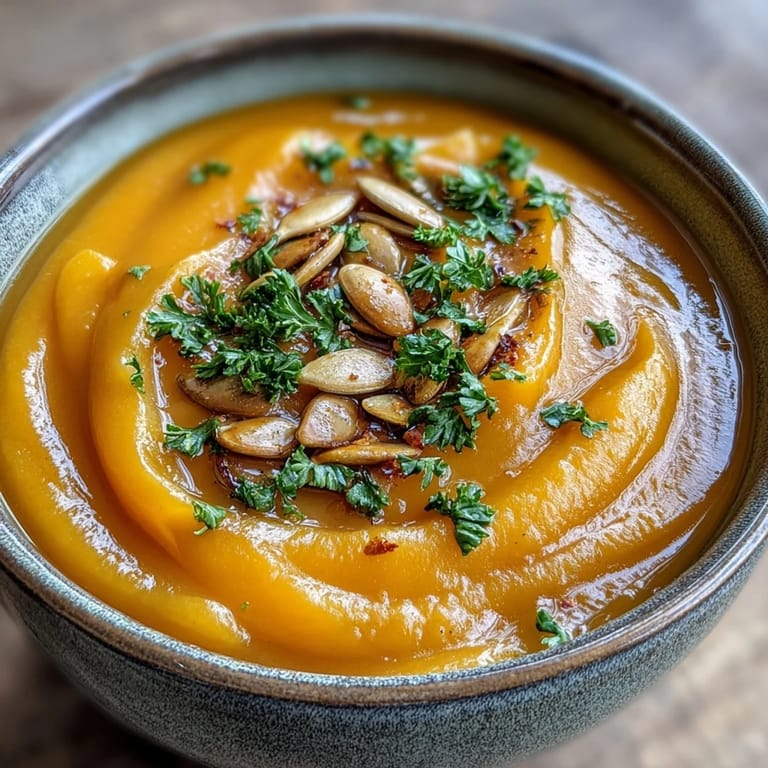
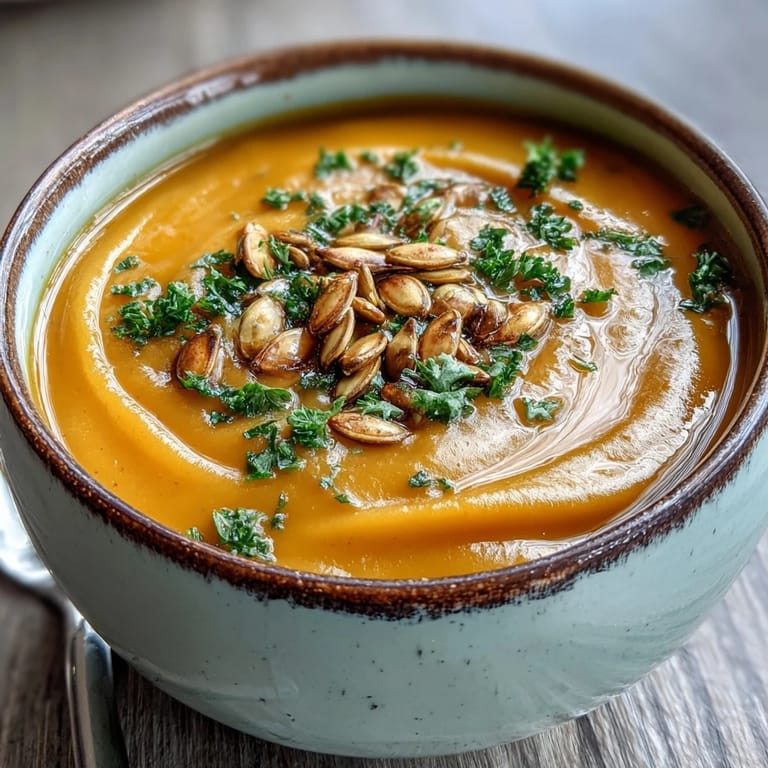
- Pumpkin seeds and parsley (optional garnish): These aren't just decoration; the toasted seeds add a nutty crunch that transforms each spoonful.
Tired of Takeout? 🥡
Get 10 meals you can make faster than delivery arrives. Seriously.
One email. No spam. Unsubscribe anytime.
Instructions
- Sauté the onion foundation:
- Heat olive oil in your pot over medium heat and add the chopped onion, letting it sit undisturbed for the first minute so it starts to golden on the bottom. Stir occasionally for 4 to 5 minutes until it turns soft and translucent—you're building flavor here, not rushing.
- Build the aromatic base:
- Stir in the minced garlic, squash cubes, and diced apples, cooking for about 3 minutes until everything is coated in the fragrant oil. You'll notice the kitchen starting to smell like something special already.
- Add the spice layer:
- Sprinkle in the cinnamon, nutmeg, and ginger, stirring constantly for about 30 seconds so the spices bloom and release their essential oils into the oil. This step is worth slowing down for—it's where the soup gets its soul.
- Simmer until tender:
- Pour in the vegetable broth and apple cider, bring everything to a boil, then turn the heat down to a gentle simmer. Let it bubble quietly uncovered for 25 to 30 minutes, until the squash breaks apart easily when you press a piece against the side of the pot with a spoon—that's your signal it's ready.
- Blend to silky perfection:
- If using an immersion blender, turn off the heat, let things cool for a minute, then blend in the pot using slow, deliberate motions until completely smooth. If using a countertop blender, work in careful batches, never filling more than halfway, and always hold the lid down with a folded kitchen towel to prevent hot soup explosions.
- Finish with creaminess:
- Stir in your cream or coconut milk if using, then taste and adjust the seasoning with salt and pepper. This is the moment to trust your palate—season gradually and taste between additions.
- Serve and celebrate:
- Ladle into bowls and top with a small handful of toasted pumpkin seeds and fresh parsley if you have them. Even plain, this soup is stunning.
 Pin it
 Last spring, my daughter asked if she could help make this soup, and I watched her carefully peel the squash (with my hands nearby, ready to catch it), her face concentrated and proud. When she tasted her creation, she declared it better than anything we'd ever made before, and I realized this simple recipe had given her a moment of real confidence. That's the kind of dish that earns a permanent spot in your rotation.
Roasting for Extra Depth
For a more caramelized, complex flavor, try roasting your butternut squash cubes at 400°F (200°C) for about 20 minutes until the edges turn golden and crispy, then add them to your pot instead of using raw cubes. This adds an unexpected richness that feels almost decadent for such a simple step—I discovered it by accident when I roasted some squash for a side dish and had leftovers that I decided to throw into the soup pot on a whim.
Making It Vegan
Swapping coconut milk for heavy cream doesn't just make this soup dairy-free; it actually adds a subtle tropical note that plays beautifully with the spices. Some people find coconut milk too strong, so start with half the amount and add more only if you want additional creaminess and flavor—I've learned the hard way that more isn't always better when it comes to that particular ingredient.
Serving Suggestions and Storage
This soup keeps beautifully in the refrigerator for up to four days, and it also freezes wonderfully for up to three months—I usually freeze it in individual portions so I can thaw and reheat exactly what I need. Serve it alongside crusty bread for dipping, with a simple green salad to balance the richness, or even pair it with grilled cheese for something that feels like autumn comfort food.
- A pinch of cayenne pepper stirred in at the end adds subtle heat that makes you want another spoonful.
- Crispy sage leaves or toasted walnuts work beautifully as garnishes if you don't have pumpkin seeds on hand.
- This soup tastes even better the next day after the flavors have time to mellow and blend together.
 Pin it
 This soup has taught me that some of the best food comes not from complicated recipes or rare ingredients, but from knowing how to coax maximum flavor from things you already have. Make it once and you'll understand why it's the dish I reach for whenever I want to feel grounded and nourished.
Recipe FAQs
- → Can I make this soup ahead of time?
Absolutely. This soup actually improves after resting in the refrigerator for 1-2 days, allowing flavors to meld. Store in an airtight container and reheat gently on the stovetop.
- → What apples work best?
Sweet varieties like Gala, Fuji, or Honeycrisp provide natural sweetness that balances the squash's earthiness. Avoid tart apples like Granny Smith as they can overpower the delicate spice blend.
- → Is roasting the squash necessary?
Not required, but roasting enhances the squash's natural sweetness and adds caramelized depth. Simply toss cubes with olive oil and roast at 400°F for 20 minutes before adding to the pot.
- → Can I freeze this soup?
Yes, freeze for up to 3 months. Cool completely, transfer to freezer-safe containers, leaving 1-inch headspace for expansion. Thaw overnight in the refrigerator before reheating.
- → How do I achieve the smoothest texture?
Use an immersion blender directly in the pot for convenience, or process in batches in a countertop blender. For ultra-silky results, pass the puréed soup through a fine-mesh sieve before adding cream.