 Pin it
 A colleague brought blood oranges to the office one February morning, and I sliced one open at my desk without thinking much of it. The crimson juice pooled across my paperwork like something out of a still life painting. I took the rest home that night and built these tarts around them, mostly because I couldn't stop thinking about that color. They turned out better than I expected, which almost never happens with pastry.
I made these for a dinner party once where everyone showed up late because of rain. The tarts sat in the fridge getting colder and somehow better, the custard firming up just enough to slice cleanly. By the time we ate them, near midnight, they tasted like the best part of waiting. One guest scraped her plate with the side of her fork and asked if I'd made extra.
Ingredients
- All-purpose flour: The backbone of the tart shell, it needs to stay cold during mixing or the dough will turn greasy instead of flaky.
- Powdered sugar: Dissolves faster than granulated and gives the crust a tender, almost shortbread-like crumb.
- Unsalted butter, cold and cubed: Cold butter creates steam pockets as it bakes, which is what makes the crust crisp, so don't let it soften.
- Egg yolk: Adds richness and helps bind the dough without making it tough like whole eggs sometimes do.
- Ice water: Use just enough to bring the dough together, a tablespoon at a time, or it will get sticky and hard to roll.
- Whole milk: The base of the custard, and whole milk is worth it here because lower fat versions don't coat your spoon the same way.
- Granulated sugar: Sweetens the custard without overwhelming the vanilla or the blood orange tang that comes later.
- Egg yolks: These thicken the custard and give it that pale yellow richness that feels luxurious on the tongue.
- Cornstarch: A little insurance against curdling, and it helps the custard set firm enough to slice cleanly in the tart shell.
- Pure vanilla extract: Don't skip the real stuff, imitation vanilla tastes flat next to fresh citrus.
- Blood oranges: The star of the show, with their ruby flesh and slight raspberry edge that regular oranges just don't have.
- Honey: Optional but worth it for a glossy finish that catches the light and adds a whisper of floral sweetness.
Tired of Takeout? 🥡
Get 10 meals you can make faster than delivery arrives. Seriously.
One email. No spam. Unsubscribe anytime.
Instructions
- Make the dough:
- Pulse the flour, powdered sugar, and salt in a food processor until combined, then add cold butter and pulse until it looks like wet sand. Add the egg yolk and drizzle in ice water slowly, pulsing just until the dough clumps together when you pinch it.
- Chill the dough:
- Press the dough into a flat disk, wrap it tightly in plastic, and refrigerate for at least an hour. This rest lets the gluten relax so the dough rolls out without shrinking back like a rubber band.
- Roll and shape:
- On a floured surface, roll the dough to about an eighth of an inch thick, turning it often so it doesn't stick. Cut circles large enough to fit your tart pans, press gently into the corners, and trim the overhang with a knife.
- Blind bake the shells:
- Chill the lined pans for 20 minutes, then line each with parchment and fill with pie weights or dried beans. Bake at 350°F for 15 minutes, remove the weights, and bake another 5 minutes until the edges turn golden.
- Cook the custard:
- Heat the milk in a saucepan until it steams but doesn't boil, then whisk the egg yolks, sugar, and cornstarch in a bowl until smooth and pale. Slowly pour the hot milk into the yolk mixture while whisking, then return everything to the pan and cook over medium heat, stirring constantly, until it thickens and bubbles.
- Finish and cool the custard:
- Remove the pan from heat and stir in vanilla and butter until smooth. Transfer to a bowl, press plastic wrap directly onto the surface to prevent a skin, and let it cool before chilling for at least an hour.
- Assemble the tarts:
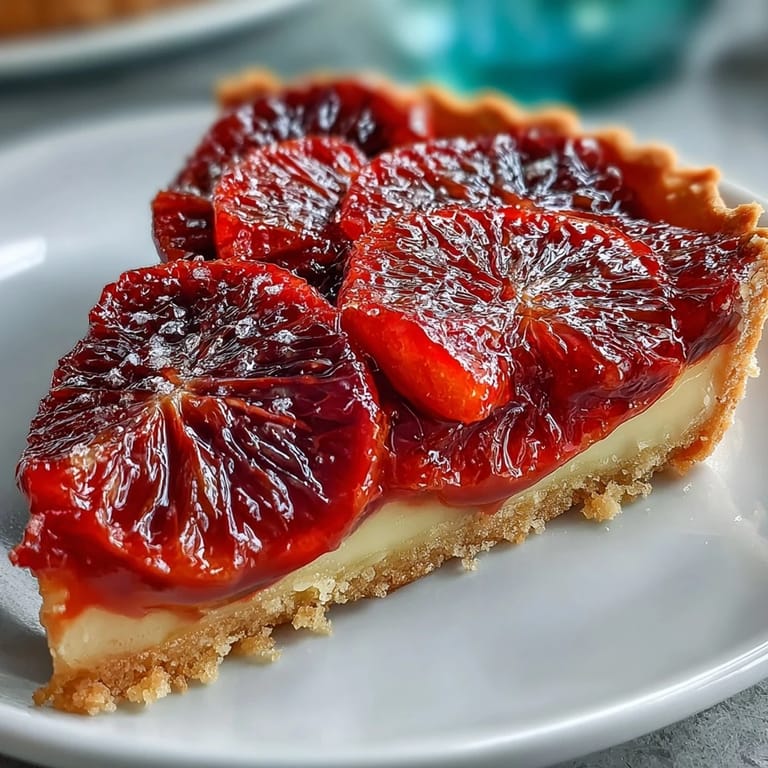
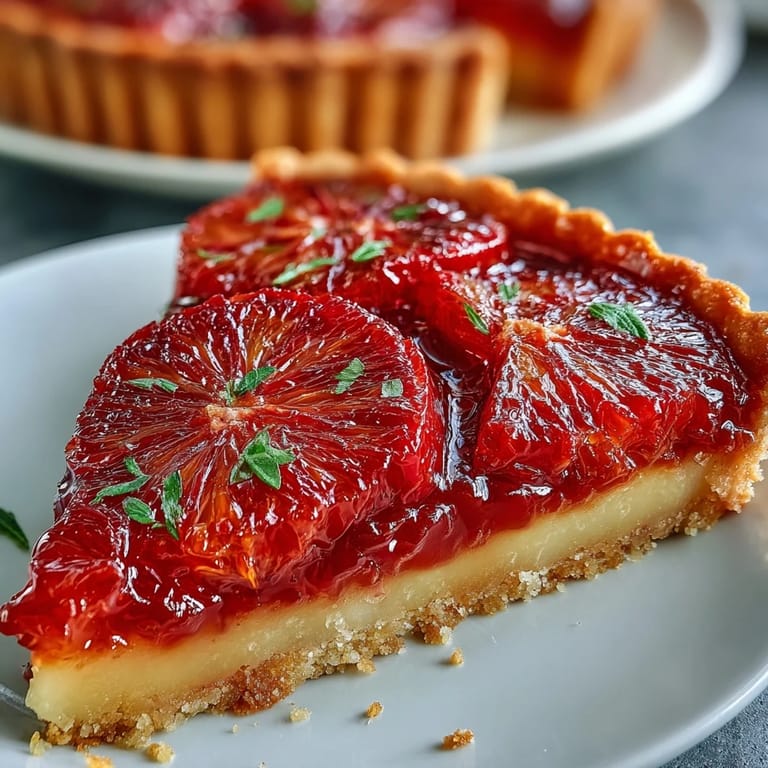
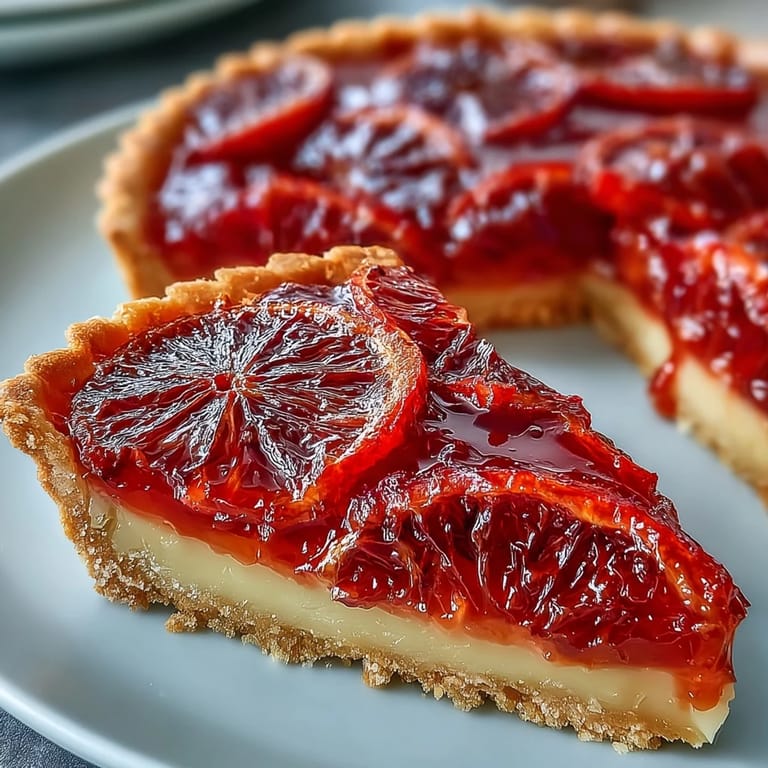
- Spoon the cold custard into the cooled tart shells, smoothing the tops with the back of a spoon. Arrange thin slices of blood orange on top in overlapping circles, working from the outside in.
- Glaze and chill:
- If you want a glossy finish, warm honey and a teaspoon of water in a small pan and brush it lightly over the oranges. Chill the finished tarts until you're ready to serve.
 Pin it
 My neighbor once asked for the recipe after I brought one over on a Tuesday for no real reason. She said it reminded her of something her grandmother used to make in Sicily, though I'm certain her grandmother's version was better. Still, it felt good to know a dessert could carry that kind of weight, even when it wasn't trying to.
How to Know When the Custard Is Ready
The custard is done when it coats the back of a spoon and holds a clean line when you drag your finger through it. It should look thick and glossy, not runny or grainy. If you see any lumps forming, pull it off the heat immediately and whisk hard, sometimes that's enough to save it before it curdles. I've learned to trust the texture more than the clock, because stovetops vary and a minute too long can ruin everything.
Choosing and Preparing Blood Oranges
Look for blood oranges that feel heavy for their size and have smooth, firm skin without soft spots. The deeper the red color when you slice them open, the more dramatic they'll look on the tart, though even pale ones taste beautiful. I like to slice them as thin as possible with a very sharp knife, because thick slices can overwhelm the delicate custard. If you can't find blood oranges, regular navel or Cara Cara oranges work fine, you just lose that jewel-toned drama.
Make-Ahead and Storage Tips
The tart shells can be baked up to two days ahead and stored in an airtight container at room temperature. The custard keeps well in the fridge for up to three days, pressed with plastic wrap so it doesn't form a skin. I assemble the tarts the morning of serving so the crust stays crisp, because custard will soften pastry if it sits too long.
- If you need to transport them, chill the assembled tarts until firm and carry them in a flat box.
- Leftover tarts keep in the fridge for up to two days, though the crust loses some of its snap.
- You can freeze the baked, unfilled shells for up to a month and fill them after thawing.
 Pin it
 These tarts show up best when you're not trying too hard, just good ingredients handled carefully and arranged with a little attention. They taste like winter light, which is exactly what February needs.
Recipe FAQs
- → Can I make the tart shells ahead of time?
Yes, baked tart shells can be stored in an airtight container at room temperature for up to 2 days or frozen for up to a month. Thaw completely before filling.
- → What if I can't find blood oranges?
Regular navel oranges, cara cara oranges, or even grapefruit segments work beautifully as substitutes. The flavor will be slightly different but equally delicious.
- → How do I prevent the custard from curdling?
Whisk constantly while cooking and keep the heat at medium. Tempering the eggs by gradually adding hot milk also prevents scrambling and ensures a smooth texture.
- → Can these tarts be made gluten-free?
Absolutely. Use a 1:1 gluten-free baking flour in place of all-purpose flour. The texture may be slightly different but will still be delicious.
- → How long do assembled tarts stay fresh?
Once assembled, the tarts are best enjoyed within 4-6 hours. The custard and oranges can make the shells soggy if left too long, so assemble close to serving time.
- → Do I need special tart pans for this?
Individual 4-inch tart pans with removable bottoms work best for clean presentation. In a pinch, you can use a muffin tin lined with parchment circles.