 Pin it
 There's something about assembling a salmon bowl that feels like you're creating edible art on a Tuesday evening. My kitchen was quiet except for the gentle sizzle of salmon hitting the oven, and I caught myself standing there, watching the glaze bubble at the edges, thinking how a dish this beautiful shouldn't be this simple to pull together. The aroma of ginger and soy drifting through the apartment had my roommate peeking in before dinner was even ready. It's become my go-to when I want something that tastes like I spent hours cooking but actually feels effortless.
I made this for my sister after she mentioned wanting to eat better but not sacrificing flavor, and watching her face light up when she tasted it was worth every vegetable I julienned. She's made it three times since then, which tells you something about how forgiving and adaptable the recipe actually is.
Ingredients
- Salmon fillets (4, about 150 g each): Look for wild-caught when you can—the color will be deeper and the flavor more complex, though farmed works beautifully too; pat them dry before glazing so the heat can caramelize the sauce properly.
- Soy sauce (3 tbsp): This is your umami backbone, so don't reach for the cheapest bottle; a quality soy sauce makes the entire glaze taste more refined and less salty.
- Honey (2 tbsp): Balances the saltiness with gentle sweetness and helps create that glossy, caramelized coating when the salmon bakes.
- Fresh ginger (1 tbsp grated): Grate it right before mixing to capture the bright, peppery bite; ground ginger will work in a pinch but tastes more muted and dusty.
- Garlic (2 cloves minced): Mincing small ensures it distributes evenly through the glaze and caramelizes rather than burning in the oven.
- Rice vinegar (1 tbsp): Adds acidity and complexity that cuts through the richness of the salmon oil; it's gentler than white vinegar and feels more authentically Asian.
- Sesame oil (1 tbsp): A little goes a long way—this is the secret ingredient that makes the glaze taste like it came from a professional kitchen, nutty and deeply satisfying.
- Cornstarch (1 tsp optional): Only use this if you prefer a thicker, glossier glaze that clings to the salmon; the sauce is lovely thinner too.
- Jasmine or sushi rice (2 cups uncooked): Jasmine rice is slightly more fragrant and fluff, making it feel special; sushi rice is stickier and works if you prefer that texture.
- Carrots, cucumber, red bell pepper (1 cup each julienned): The crunch and color are essential—julienne them thin so they stay crisp and look elegant, not thick chunks.
- Edamame (1 cup shelled and cooked): Buy them frozen and thawed; they add protein and a pop of green that makes the bowl feel complete and nutritious.
- Toasted sesame seeds (2 tbsp): Buy them already toasted or toast them yourself in a dry pan for 2 minutes—they add nuttiness and prevent the bowl from feeling plain.
- Scallions (2 thinly sliced): The fresh onion bite at the end is crucial; slice them just before serving so they stay perky and bright.
- Lime wedges (optional): A squeeze of lime at the end brightens everything and adds a citrus note that feels summery even in winter.
Tired of Takeout? 🥡
Get 10 meals you can make faster than delivery arrives. Seriously.
One email. No spam. Unsubscribe anytime.
Instructions
- Rinse and cook the rice:
- Run the rice under cold water in a fine-mesh strainer, swirling gently with your fingers until the water runs mostly clear—this removes excess starch so each grain stays separate. Combine with water in a saucepan, bring to a boil, then immediately drop the heat to low, cover, and let it simmer undisturbed for 15 minutes before resting, covered, for another 10 minutes off the heat.
- Build the glaze:
- Whisk together soy sauce, honey, fresh ginger, minced garlic, rice vinegar, and sesame oil in a small bowl until the honey dissolves completely and everything looks like a glossy, amber sauce. If you're using cornstarch, dissolve it in 1 tablespoon of water first, then stir it in for a sauce that will thicken as it simmers.
- Prepare the oven and salmon:
- Preheat your oven to 200°C (400°F) and line a baking sheet with parchment paper so cleanup is effortless. Pat the salmon fillets dry with paper towels—this helps the glaze caramelize rather than steam—then place them skin-side down on the sheet.
- Glaze and bake:
- Brush each fillet generously with the glaze, reserving about 3 tablespoons for finishing and simmering later. Slide the sheet into the oven and bake for 12 to 14 minutes until the salmon is opaque and flakes easily with a fork; the timing depends on fillet thickness, so start checking at the 12-minute mark.
- Finish the glaze:
- While the salmon bakes, pour the reserved glaze into a small saucepan and bring it to a gentle simmer over medium heat, stirring occasionally until it thickens slightly (about 1 to 2 minutes if you used cornstarch). If you didn't use cornstarch, a quick simmer just warm it through and concentrate the flavors without breaking down the honey.
- Prepare the vegetables:
- Julienne the carrots, cucumber, and red bell pepper into thin, even matchsticks that will look elegant in the bowl and stay crisp. You can do this while the salmon bakes, which keeps the whole meal coming together on schedule.
- Assemble the bowls:
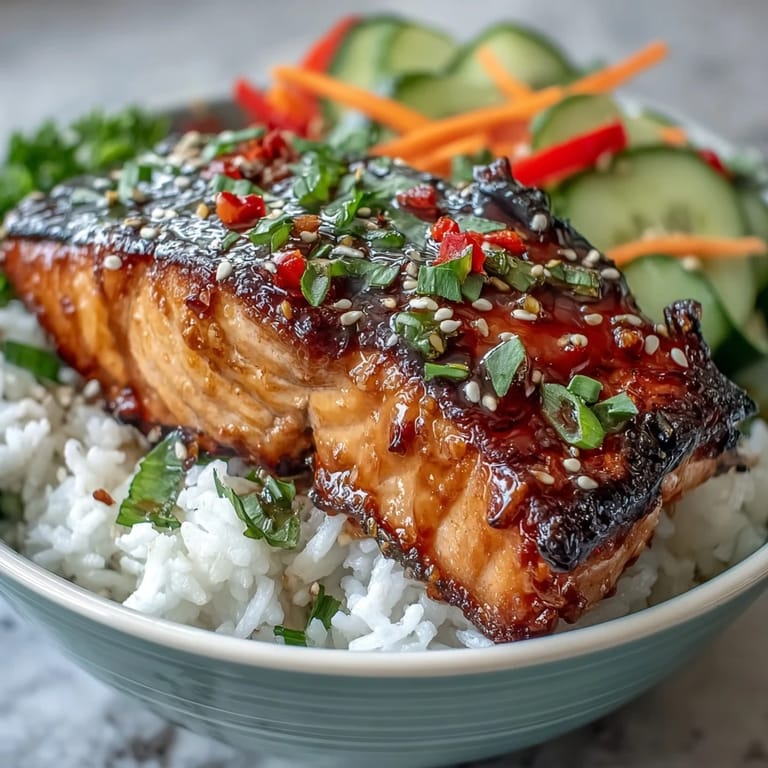
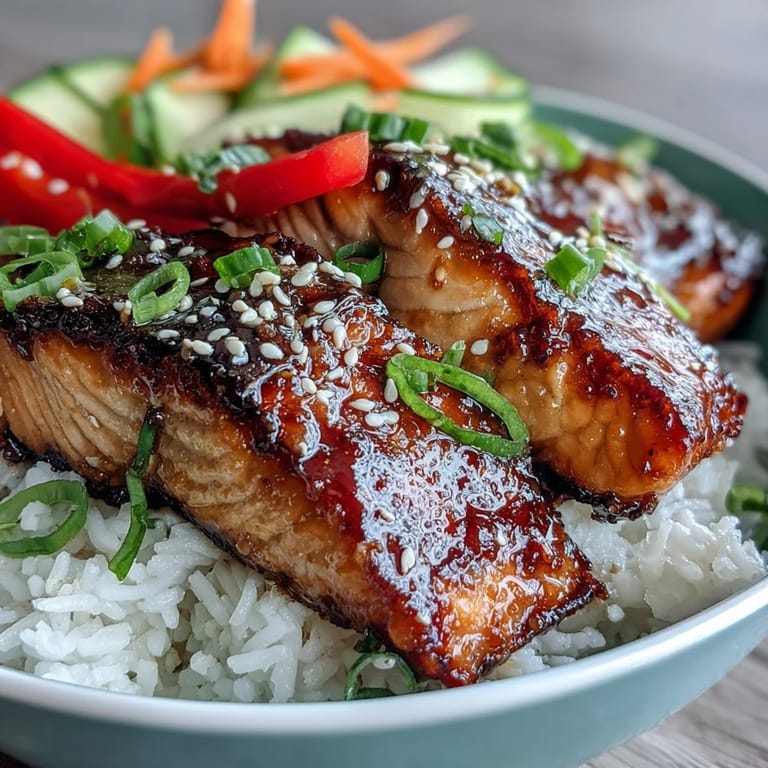
- Divide the fluffy rice among four bowls, creating a gentle mound in the center. Top each mound with a baked salmon fillet, then arrange the julienned vegetables and edamame around the salmon like you're plating something special.
- Finish and garnish:
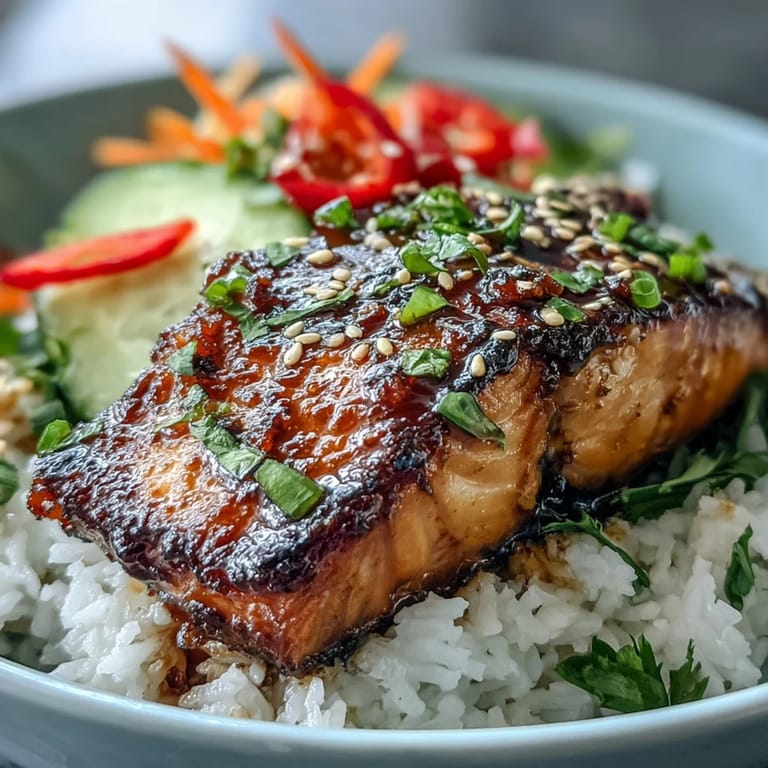
- Drizzle each bowl with the thickened glaze so it pools around the rice and salmon, then scatter toasted sesame seeds over the top and finish with fresh scallions. A squeeze of lime wedge on the side adds brightness and is optional but genuinely transforms the final bite.
 Pin it
 I brought this bowl to a potluck once, and it was the first thing gone—not because it was the fanciest dish, but because it looked so vibrant and tasted so clean and purposeful. That moment taught me that food doesn't have to be complicated to feel like you've done something right.
Why This Bowl Works as a Weeknight Dinner
The beauty of this recipe is that you can prep the glaze and vegetables in the morning, then spend only 30 minutes actually cooking in the evening. By the time you've started the rice, the salmon is already in the oven, and there's almost no active cooking time where you're standing at the stove. It's the kind of meal that looks like you've put in effort but actually fits seamlessly into a busy day, which makes you want to make it again and again.
Making It Your Own
Once you master the basic formula, this bowl becomes a canvas for whatever you have on hand or whatever you're craving that week. I've swapped quinoa for rice when I wanted something earthier, added avocado slices for creaminess, and thrown in pickled ginger when I wanted sharper notes. Even small changes—like using brown sugar instead of honey for a deeper glaze or adding sriracha for heat—keep the dish feeling fresh and prevent it from becoming routine.
Storage and Make-Ahead Tips
This bowl is best enjoyed fresh, with the salmon still warm and the vegetables crisp, but leftovers stay delicious for up to two days in the refrigerator in an airtight container. The glaze can be made up to three days ahead, and the vegetables can be julienned and stored in separate containers so you're only assembling and cooking on the day you eat. One thing I learned the hard way is to keep the glaze separate from the rice until you're ready to serve, otherwise everything gets soggy and the flavors muddy together.
- Make the glaze while the salmon is baking to keep dishes manageable and your evening stress-free.
- Julienne vegetables the morning of if you have time, storing them in separate containers so colors stay vibrant.
- Don't dress the bowl until just before eating, or the rice will absorb too much sauce and lose its fluffy texture.
 Pin it
 This bowl has become one of those recipes I make when I want to feel like I'm taking care of myself without any of the guilt or compromise on flavor. It's genuinely delicious enough to serve to people you want to impress, yet approachable enough to make on a Tuesday when you're tired.
Recipe FAQs
- → Can I use frozen salmon fillets?
Yes, frozen salmon works well for this bowl. Thaw completely in the refrigerator overnight before cooking, then pat dry with paper towels to ensure the glaze adheres properly.
- → What vegetables work best for this bowl?
Julienned carrots, cucumber, and red bell pepper provide excellent crunch and color. You can also add shredded cabbage, snap peas, or mung bean sprouts for extra texture and freshness.
- → How do I store leftovers?
Store components separately in airtight containers for up to 2 days. Keep the salmon, rice, and vegetables in the refrigerator. Reheat salmon gently to avoid drying it out, and assemble bowls fresh when ready to eat.
- → Can I make this gluten-free?
Absolutely. Substitute regular soy sauce with tamari or coconut aminos for a gluten-free version. All other ingredients naturally contain no gluten, making this an easy dietary adjustment.
- → What can I use instead of jasmine rice?
Brown rice, quinoa, or cauliflower rice make excellent alternatives. Brown rice adds nutty flavor and extra fiber, while quinoa provides complete protein. Adjust cooking time accordingly.
- → How do I know when the salmon is done?
The salmon is cooked when it flakes easily with a fork and reaches an internal temperature of 145°F (63°C). The flesh should be opaque and slightly pink in the center, with a beautiful caramelized glaze on top.